Italian phrases for travelers – Essential vocabulary

Learn essential Italian phrases for travelers

Traveling to Italy is a dream, an exciting adventure that’s filled with great food, amazing places, and sunshine. The history and nature throughout the country are fascinating, however there’s one thing that you should keep in mind! Speaking some Italian is important if you’re visiting Italy!

So before you get on the plane, make sure to learn some Italian phrases for travelers!

Maybe you have already studied some Italian, by listening to music, reading books, or watching movies. Which is great! But if you need some more training, make sure to go through this Italian travel vocabulary as well! Make sure to pack these Italian words and phrases for your trip, so you won’t get into unpleasant situations with the locals.

Italian phrases for travelers – Greetings

Buon giorno — Good morning

You can use this phrase any time of the day until 12 pm. In Italy, it’s really important when you go in and out of a shop, or in any other case you’re connecting with people to greet them!

Say, “Buon giorno!” as you enter a small shop, as you walk into a booth, as you sit beside somebody in the lounge or waiting area. If you can, extend a firm handshake.

Buon pomeriggio — Good afternoon

You can use buon pomeriggio from lunchtime to around 5 pm. However, don’t be surprised if you won’t get back the same greeting. Italians tend to use buon giorno till lunch and then switch to buona sera.

Buona sera — Good evening

Buona sera is officially known to be used after 12pm, instead of buon pomeriggio, and it’s used until maybe after dinner, around 9-10pm.

Buona notte — Good night

Buona notte is saying goodbye when you’re retiring at night, or when someone else is going home to sleep, so it’s more intimate.

Ciao — Hi/Hello

Ciao is the most common greeting in Italy. You can use it at any time of the day, but it’s important to not say Ciao to an elder. In Italy they use formal communication with elder people, so to greet them, you should strictly use the formal greetings: buon giorno, buon pomeriggio, buona sera.

You can use Ciao for anyone else who is closer in age or younger. When you want to greet more people, you can say “Ciao a tutti” as hello everyone. Ciao is used also to say goodbye as well.

Salve – Hello

Salve is a more formal form of Ciao. This one you can use in formal situations and on older people, but not elders. For example, if you are 20, and the shop owner is 40, you can say salve instead of Ciao.

Arrivederci – Goodbye

Another Italian word that you should use to say Goodbye to someone. Arrivederci is an absolutely formal way to say bye, so you can use it for elders and people you don’t know in shops and restaurants.

These 6 greetings are the most important Italian phrases for travelers that must be learned, as you’ll have to use them a lot.

To extend your Italian travel vocabulary, here are some other ways that you can say goodbye in Italian:

Arrivederla — Until we see each other again (formal)

A più tardi — See you later

A dopo – See you later

Riguardati — Take care

Ci vediamo — See you

Alla prossima — ‘Til next time

Ci sentiamo – See you later, used in the context of call/text/messenger

A domani – See you tomorrow

Necessary Italian phrases for travelers

Grazie — Thank you

The word grazie is another one that you have to use a lot in Italy. When you get a coffee, or anything that’s brought to your table in a restaurant, you say grazie. Also, in Italy it’s really common to say goodbye and thank you when you leave a shop or a bar, restaurant. When you’re leaving you say “Ciao, grazie!” or “Grazie. Arrivederci!”.

Grazie mille — Thanks a lot

This is the way to say thank you when you want to show more respect and compassion for something you’ve received. Grazie mille literally means “thanks a million times”.

Prego — You’re welcome

Prego is used as “you’re welcome” but it also has other meanings. Prego is used also as “Yes? How can I help?” when you go in the shop or a bar and the waiter or staff member will ask you for what you’d like? Prego also can be used as “there you go” or “be my guest” for example if you’re asked if they can borrow something (like a chair).

Another meaning of prego is “after you” when someone lets you enter a room first, or you want to do that for someone. All in all, prego can be used for many different things.

Scusa — Excuse me (informal)

It doesn’t matter what’s your emergency, you never approach an Italian to ask them something without saying excuse me! It’s considered rude and it’s not tolerated. When you approach someone, first always use scusa. Remember, that this is a form you’re talking to friends, colleagues, or people that are around your age!

Mi scusi — Excuse me (formal)

The formal Italian phrase for travelers to keep in mind when you want to approach someone is mi scusi. This is how you should open a communication with an elder, or a complete stranger. It’s more formal to use mi scusi and it’s showing the other person that you’re giving them the due courtesy.

Mi dispiace – I’m sorry

Mi dispiace is used for whatever misunderstanding you encounter during your trip and you want to apologize. This is a more “sensitive” way to say sorry, so you don’t have to use it when you try to open a communication with someone, but rather when you want to say that you’re sorry for something.

Another phrase you can use is mi spiace which means the same but it’s more often used when someone tells you something bad that has happened.

Italian phrases for travelers – Assent/Dissent

Expressing assent/dissent is important in Italian! Here are some more key Italian phrases for travelers

— Yes

No — No

Ma certo — Definitely/Of course

If you’re asked if you like Italy, make sure to say: “Ma certo!

Sì means yes and No means no. This is simple. But what happens if you’re not sure about the answer? Here are some Italian words and phrases you can use:

Forse — Maybe

Può darsi — Maybe

Magari – Maybe

Non lo so — I don’t know

Penso di no — I don’t think so

Non credo – I don’t think so

Please in Italian

Per favore — Please

Per cortesia — Please (more formal)

Per piacere — Please

Same as please, per favore is used to wrap up sentences that involve favors, requests, demands, or orders (at a bar/restaurant).

If you end every other sentence with “Per favore” you will sound like an extremely polite tourist, which is great! You may also hear per cortesia and per piacere with the same meaning.

The nicer you are the more positivity you get back from locals. Italians love to open up for a chit-chat (chiacchierare) but you have to be nice and enthusiastic for that to happen!

Italian phrases for travelers – Speaking English in Italy

When you visit Italy, you shouldn’t have issues speaking in English in touristy areas. In restaurants, hotels, museums and everything similar you’ll be fine with English. With young Italians as well, you might find many who speak English really good.

However, if you’re in a less touristy place or you encounter people who don’t speak Italian, you might want to put your cards on the table upfront! Italians really appreciate it if you’re trying to speak, or actually can speak well Italian. However, you’ll still need to learn some phrases to explain to an Italian that you’re not a fluent speaker:

Non parlo Italiano. — I don’t speak Italian.

Parla/Parli Inglese? — Do you speak English? Parla is the formal way, parli is the informal way to ask!

Non capisco. — I don’t understand.

Parla/Parli piano/lentamente, per favore. — Please speak slowly. Parla informal, Parli formal.

Ripeti/Ripeta, per favore. — Please repeat. Ripeti is informal, ripeta is formal.

Italian phrases for travelers – Common questions and answers

Initiating a conversation with an Italian is fairly predictable. They usually ask you your name, where you’re from and what do you do for a living? Here are some questions and answers you’ll need for your Italian travel vocabulary.

Introducing yourself in Italian

Come ti chiami? — What’s your name?

Literally, you’re being asked what you call yourself or what other people call you.

The answer is:

Mi chiamo, ___. — My name is ____.

Alternatively: Sono ___. – I’m ___.

Piacere di conoscerti/ Piacere di conoscerla — Nice to meet you. (informal/formal)

Locals are more likely to say just piacere.

Give this compliment to every individual you meet on your trip.

Ask how are you in Italian

Come va? — How are you?

Alternative: Come stai? – How are you? – this is informal!

Sto bene – I’m fine

Molto bene – Very well

Molto bene, grazie – Very good, thank you.

If you’re so-so, you can say, “Così così.”

Say where you are from in Italian 

Dove abiti? — Where do you live? 

Dove vivi? – Where do you live?

Da dove vieni? – Where do you come from?

Di dove sei? – Where are you from?

Native Italian speakers will be always interested to find out where their guests are from. When they ask you dove abiti or di dove sei they are interested in the country, your nationality.

Have a ready answer through sentences like:

Abito/vivo a Londra. — I live in London.

Sono di New York. — I’m from New York.

Sono degli Stati Uniti – I’m from the United States.

Sono americano. — I’m American.

Talk about yourself in Italian

The conversation could go a million different ways from there, but one question that would most probably be asked is:

Che lavoro fai? / Cosa fai per lavoro? — What’s your job?

You can say, “Sono ____” and what your profession is. That’s good to check out in advance before heading to Italy!

Think of “sono” as the equivalent of the English phrase “I am,” and you can pretty much use it for things and facts pertaining to yourself like:

Sono sposato. — I’m married.

Sono un turista – I’m a tourist.

Sono stanco. — I’m tired.

Italian travel phrases for travelers – Asking for directions

Italy is the place where it doesn’t matter for how long you’ve been preparing your itinerary; you will most certainly get confused and lost at some point. The old towns of the Italian cities can be really confusing, even with Google Maps. So, it’s great to know some Italian phrases for travelers when you’re in need of finding your way to a certain place!

Asking for directions starts with you approaching the other person with a “Mi scusi,” asking your question, then hearing the directions to your destination.

Here are some phrases that could help you navigate this conversation.

The main question word to keep in mind is dove?

Dove? — Where?

Dov’è  ____? — Where is ____?

Names of places in Italian

Other places in Italian:

Il museo  – The museum

L’albergo – The hotel

Il teatro —Theater

Il supermercato — Supermarket

La stazione — Train station

L’aeroporto — Airport

L’ospedale — Hospital

La stazione di polizia — Police station

Fermata dell’autobus – Bus stop

Il parco — Park

Il centro — Town center
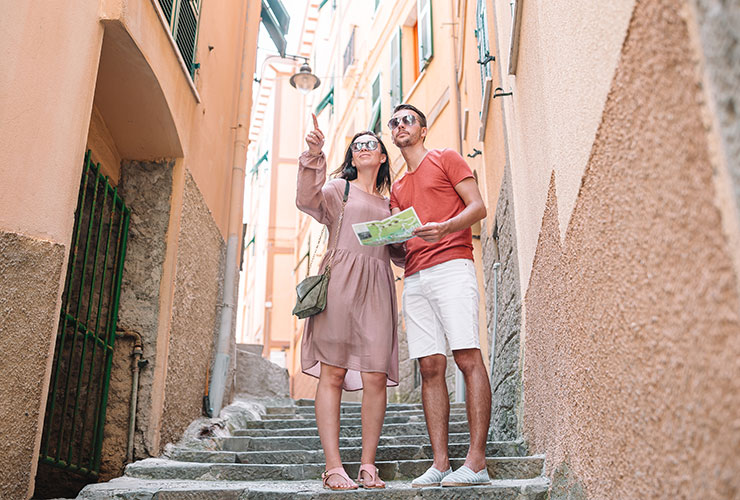
Make sure to include in your question the name of the park, airport, station, etc. Otherwise, you might be misguided! Always say the official names of the places, that’s really important!

Directions in Italian 

Ask your question and you’re done. Now, listen for the directions. They talk really fast and you may have to use “Parli piano/lentamente, per favore” (Please speak slowly) and “Ripeta, per favore” (Please repeat) to get the gist of the directions.

Pay attention to their answers and these phrases:

Giri a destra / Gira a destra— Turn right (formal/informal)

Gira a sinistra / Gira a sinistra — Turn left (formal/ informal)

Vada diritto / Va dritto — Go straight ahead (formal/informal)

Vada in quella direzione / Va in quella direzione — Go that way (formal/informal)

Torni indietro/ Torna indietro — Go back (formal/informal)

È vicino — It’s near/close

È lontano — It’s far

If you hear “lontano” from the other person, that may mean your destination is not walking distance and you should consider getting a taxi.

Learn more Italian!

These are some of the basic Italian phrases for travelers.

As I’ve mentioned, in many places, especially big cities you can sort everything out if you’re speaking just in English, but knowing some basics is always great! With these phrases you should be fine having very basic conversations with locals in Italy. But if you really want to have an unique experience and have a deeper connection with Italian people and culture consider learning Italian for real!
13 delicious Italian desserts from North to South 

Italian Desserts and Food

Above all, Food and Italian desserts are surely the first things that occur in your mind when you think about Italy.

In fact, we all know that Italians love to spend hours around the table with family and friends. It does not matter whether it is Sunday, or your birthday or a festivity, on these occasions there are two very important things to remember. First, you will never know when lunch or dinner will end. Second, no matter how full you are, there is always room for dessert.

All Italian desserts are truly representative of the peninsula and carry with its centuries of history, heated discussions on the place of birth, as well as recipes’ and linguistic contamination, which lead to a bunch of funny Italian desserts’ names. On the one hand, neighboring regions have similar desserts which differ only in names and few ingredients. On the other hand, unique samples of regional pastry do exist.

And now, without any further ado…

Finally, let us get started with some of the most beloved Italian desserts that you cannot miss to try out once you are in Italy!

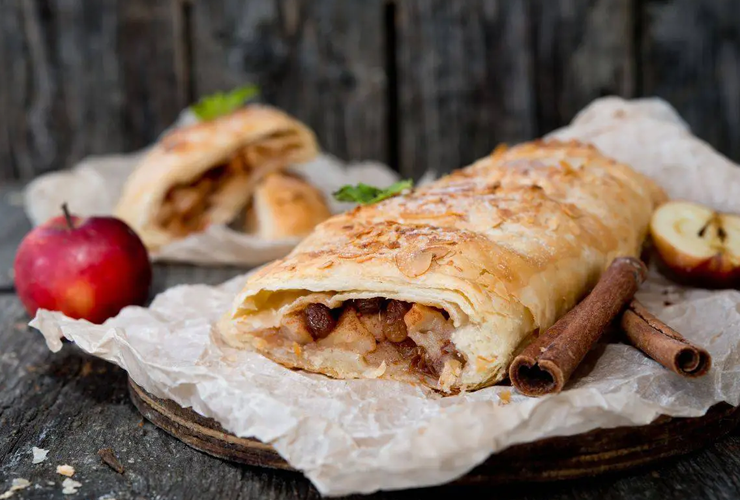
1. Strudel

Italian desserts

Let’s begin with one of the tastiest Italian desserts of Trentino Alto-Adige: apples’ strudel. It roots back to Austrian Empire and the oldest recipes are from the late 1600.

First of all, the elastic pastry is traditionally made from flour, water, oil, and salt. Then, once the thin dough is ready, it is laid out on a tea towel and filled with apples’ cubes, pine nuts, raisin, butter, and cinnamon. Finally, the pastry is rolled up very carefully and baked in the oven. Usually, it is served a little warm with vanilla ice-cream or cream.

In conclusion, these are reasons why strudel is perfect both at the end of the meal or as a snack in the afternoon. For example, you can enjoy it after a long promenade along the picturesque streets of Bolzano.

2. Sbrisolona

To continue, Sbrisolona is another delightful Italian desserts in the north-west of Italy. Primarily, this cake was invented in the Lombardy region. Later, it has spread in the nearby areas. The name comes from the Mantuan dialectal word “brisa” (crumb).

In short, Sbrisolona has poor origins: originally it was made from corn flour, lard, and hazelnuts. Nowadays, it is slightly different: yellow and white flour, sugar, butter, almonds, eggs, and lemon peels.

Furthermore, the quick mixing of the ingredients and its irregular texture is unique: the right way to eat it is to roughly break it with your hands and soak the pieces in the grappa, a typical northern liquor.

3. Bonet

https://www.youtube.com/watch?v=16z03Yt0ECs

Again, when we talk about north-west Italy, we cannot not mention the Piemonte region and the prince of all Italian desserts: the Bonet.

In short, Bonet is a pudding made from eggs, sugar, milk, cocoa, amaretti and liquor. Originally, the digestive Fernet was far more used, whereas today the Rum often replace it.

Specifically, the name is the dialectal word for “hat”, whose shape is recalled by the bonet’s mold. Surely this pudding is very easy to prepare: all you must do is whisk the ingredients together, put in the mold and cook in a Bain Marie to dry the mix.

Therefore, it is a simple and exquisite ending for your meal, especially if desserts’ wine accompanist it: for example, a Monferrato Chiaretto or a sparkling pink.

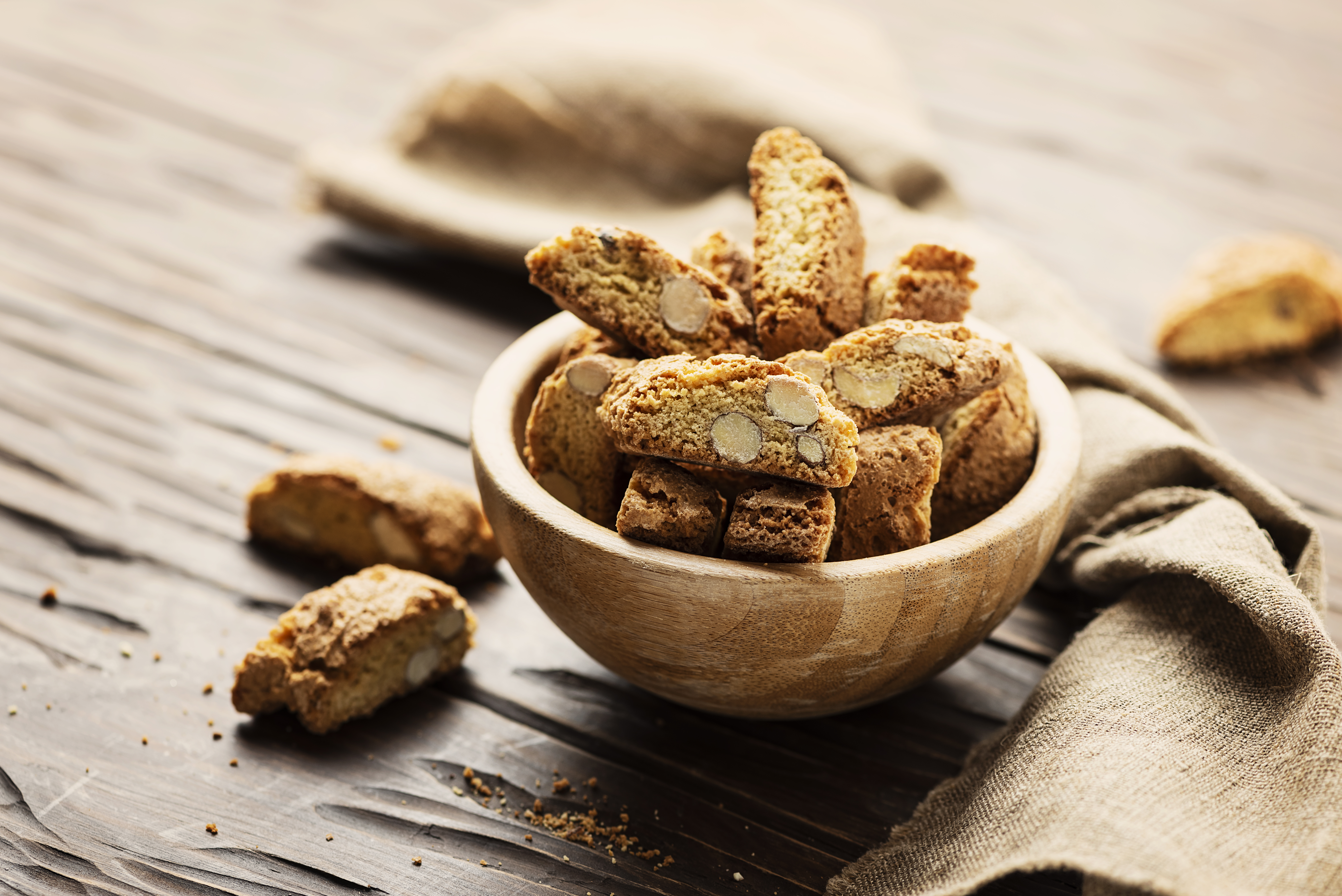
4. Cantucci

Principally, one of the most notorious Italian desserts in Tuscany is the so-called Cantuccio (Cantucci is the plural), of Tuscan city of Prato.

Moreover, the pastry chef Antonio Mattei rediscovered the original recipe and readapted it, and today his variation is accepted as the traditional one. In the XIX century Mattei brought his recipe to the Exposition Universelle in Paris and had won a special mention. Nowadays, his pastry shops the Mattonella, is still open in Prato and it is the perfect place to taste the original Cantuccio.

Lastly, this twice-baked, oblong, dry, crunchy biscuit is delicious at any time of the day. Indeed, it is usually served as an after-dinner dipped in a local wine, the Vin Santo.

5. Maritozzo

Meanwhile, our journey of Italian desserts proceeds. We have now reached the Lazio region. First of all,  here we can taste Maritozzo. It is a soft brioche sliced in two, filled with whipped cream and traditionally also with pine nuts, raisins, and orange peel.

If you have been careful, you have surely noticed that the name recalls the Italian word “marito”, husband. In fact, it seems that in the Roman empire the brides-to-be used to receive this sweet from their fiancé, who sometimes ceiled in it a small gift, for example a ring.

In conclusion, the Maritozzo is usually a rich breakfast or snack, served with coffee, cappuccino, or another hot drink.

6. Pastiera

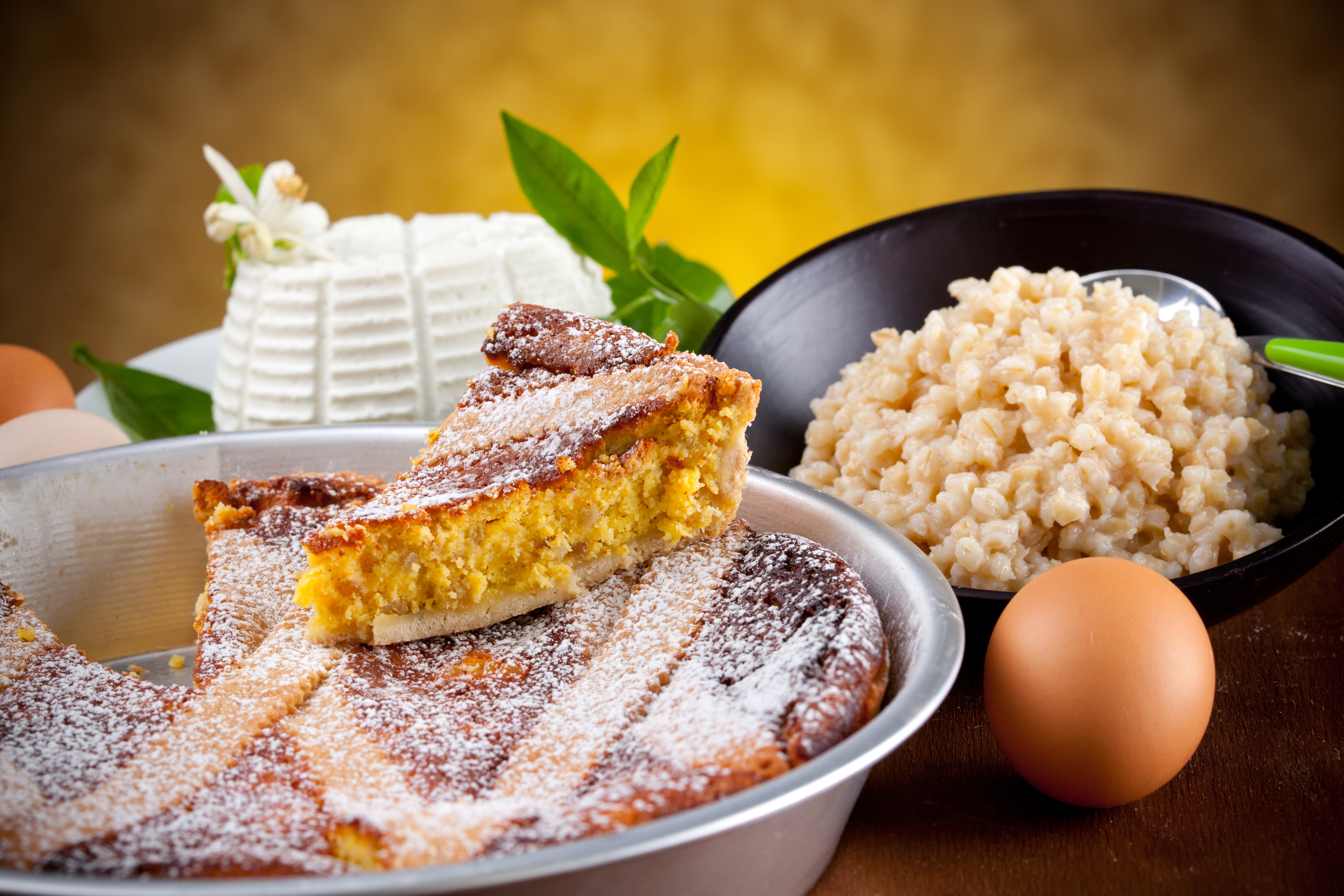
In addition, Neapolitan Pastiera is one of the most famous Italian desserts. It is a typical Easter sweet, whose origins blurred in a great number of legends.

First, the short pastry is filled with ricotta cheese (or sometimes with pastry cream), sugar, eggs, candied fruit, and wheat boiled in milk, then flavored with orange flower water. To continue, on the top of the cake are added some stripes of short pastry, that is assumed to represent the map of historic center of Naples.

Traditionally, the Pastiera is baked on Maundy Thursday or Good Friday and then it is exchanged between families as an Easter gift. As a result, in every home the fridge is full of a bunch of Pastiere (plural form) and an actual competition for the best one begins.

Eventually, this dessert is served at the end of the Easter lunch in the same mold (called ruoto) in which it is baked.

7. Babà

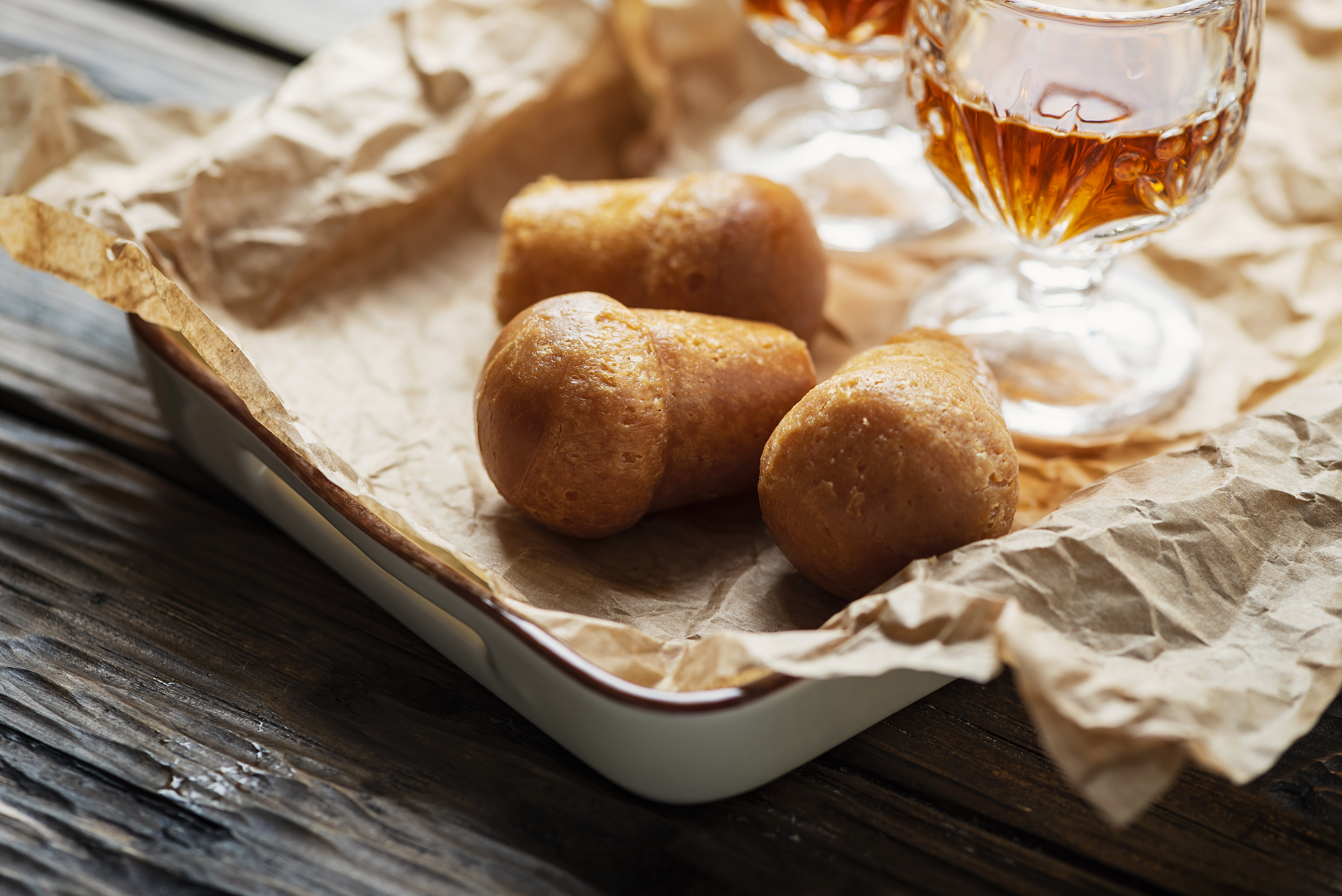
Above all, Babà is the unquestioned king of Neapolitan pastry-making, even though it is an Italian desserts that has Polish and French origins.

In particular, this is a yeast cake, dipped in a syrup made from sugar, rum or other liquor and spices. However, it can also be filled with whipped cream or pastry cream.

In conclusion, you can eat it on every occasion. Moreover, pastry shops in Naples have now reinvented it in several ways: indeed, in their windows you can see not only the traditional shapes, but also Babà filled with ice-cream, cups with layers of pastry cream and Babà or enormous Vesuvius-shaped versions of this sweet.

8. Sfogliatella

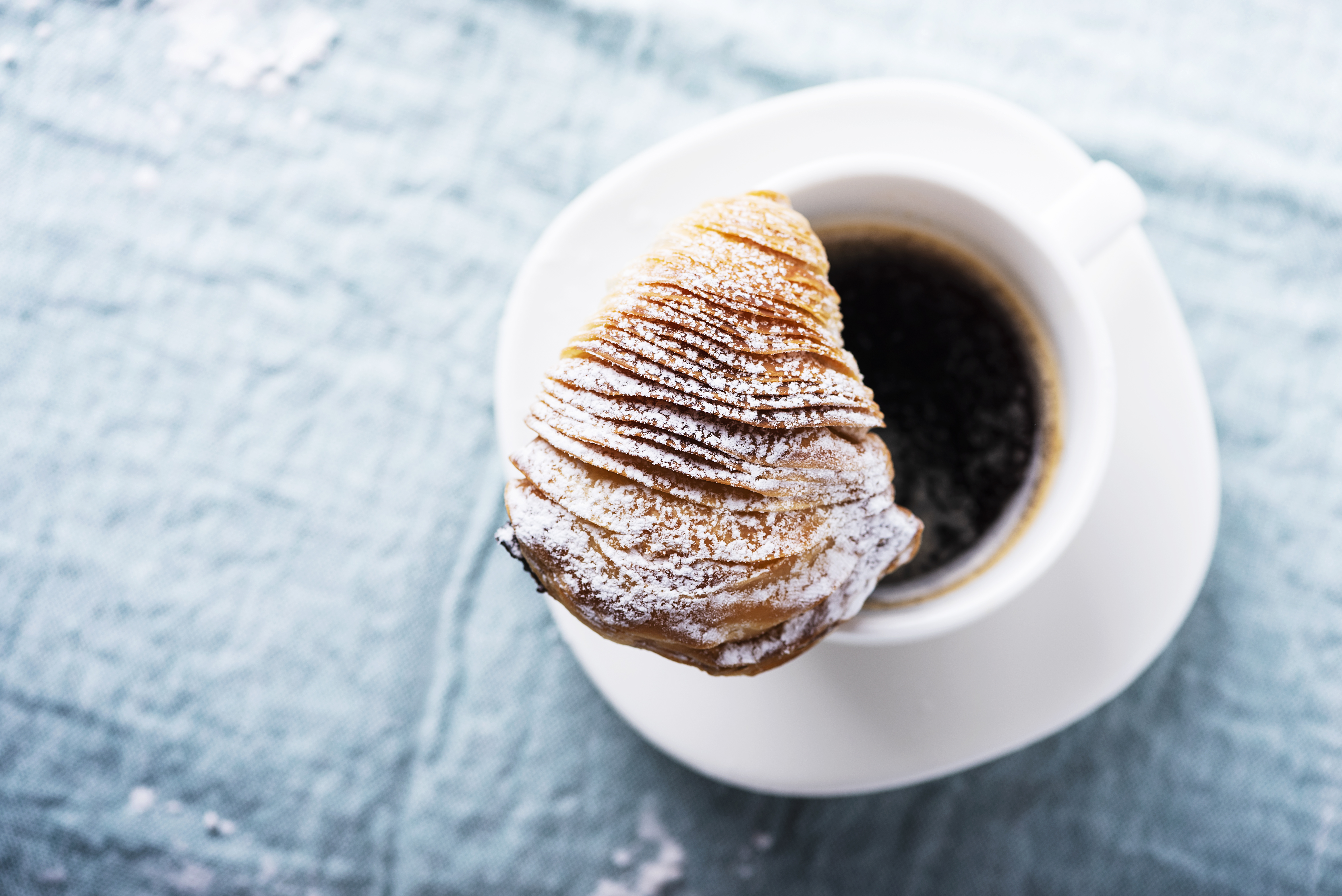
As for the Pastiera and the Babà, the Sfogliatella too is one of more traditional Italian desserts from Campania.

Originally, it was created in a monastery on the Amalfi Coast. Later, a Neapolitan pastry chef acquired the recipe and began selling it.

Above all, the choice of the perfect Sfogliatella is a serious matter for Neapolitans and everyone has his favorite shop. Still, only two of them are notorious for baking an extraordinary Sfogliatella: “Scaturchio” in the historic center of Naples and “Attanasio”, specialized only in Sfogliatelle and located near the central station of the city.

Also, you can find two version of Sfogliatella: Sfogliatella “riccia”, a curly shell-shaped puff pastry and the “frolla” one, made with a round-shape short pastry. Both are filled with semolina, candied fruit, sugar, ricotta cheese, eggs, and vanilla essence.

To conclude, as tradition dictates, you can eat Sfogliatella during the Carnival lunch. Still, this sweet is not only an ideal breakfast for Neapolitans, but also a rich snack in the afternoon.

9. Pasticciotto

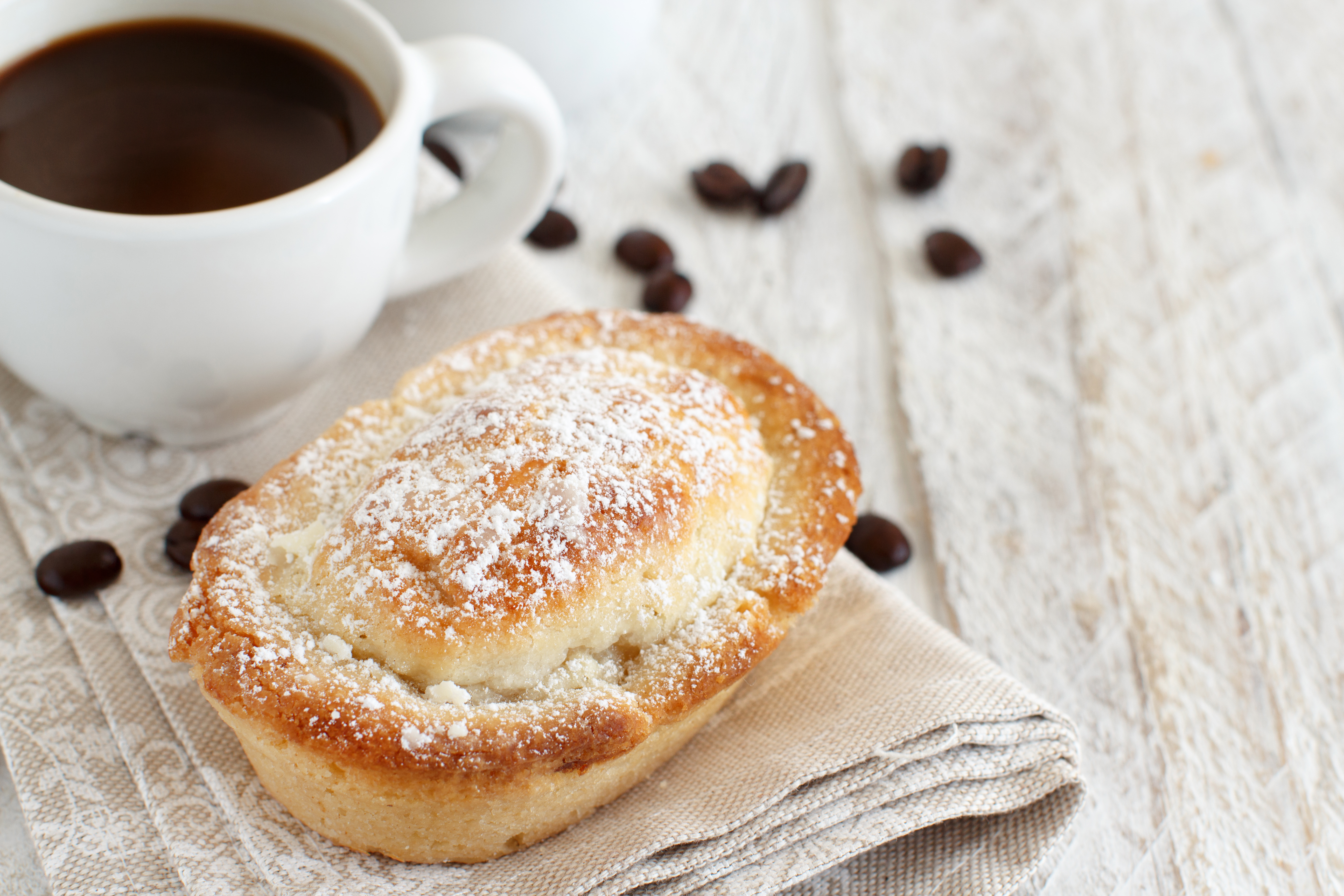
After that, we finally left Campania region, heading to another Southern area of Italy: Apulia. Here, in enchanted spots of nature and sea you will find another dessert officially recognised as one of the most typical Italian desserts of the region: the Pasticciotto.

To start, we have to say that the two Apulian cities most famous for the Pasticciotto are Lecce and Galatina, in the Salento area. In fact, the local pastry chefs created a simple but unique sweet.  It is an oval shell-shaped short pastry filled with pastry cream, but today many versions can be found.

However, they are typically eaten as a breakfast item or throughout the day, but rigorously warm. To conclude, what’s better than biting a Pasticciotto while exploring the beautiful Apulian land?

10. Pitta ‘mpigliata

Above all, this is one of Italian desserts with such a strange name and it is a traditional pastry of San Giovanni in Fiore, a city in the Calabria region. Firstly, the word “Pitta” probably comes from the Hebrew and Arabic word “pita”, which means crushed, pressed. However, it was probably invented in the XVIII century and was usually prepared for wedding ceremonies, while today has become an Easter and Christmas dessert.

In particular, the Pitta is made of hard wheat sheets’ layers alternated with a mixture of raisins, almonds, mandarin orange liquor, sugar, cinnamon and clove. Afterwards, once it is baked, the pitta is sprinkled with Cognac or Vermouth.

Also, there is the old custom to bake the pitta a week before Easter in the oven of local bakeries. However, on this occasion, in order to distinguish one’s’ pitta from the others, everyone put on his own dessert a recognition sign, like a comfit or an olive branch.

To conclude, even if nowadays a Pitta can be found everywhere in Calabria region, the authentic one is only in San Giovanni in Fiore and that’s why the city is working hard to gain the important D.O.P certification (P.D.O.).

11. Cannolo

Italian desserts

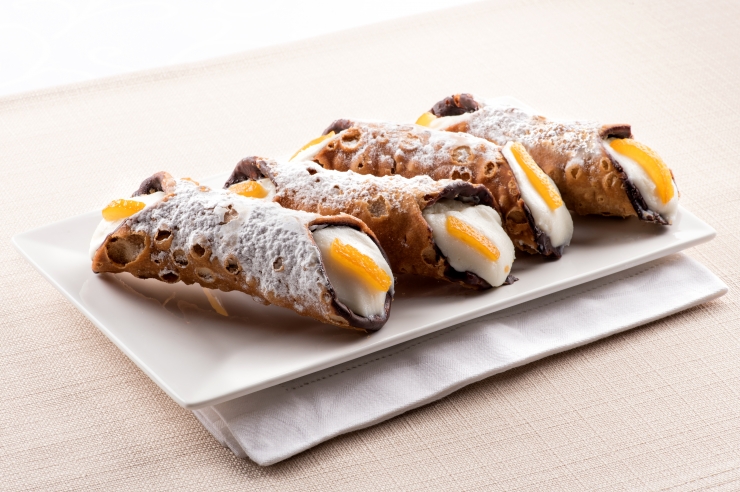
Meanwhile, we finally landed in Sicily, homeland of the worldwide famous Italian desserts and in particular of Cannolo (Cannoli for the plural). As we can see, this is a sweet probably invented during the Arabic domination.

First of all, the name comes from the word “cane”, because at first it was thanks to the river canes that the typical tube shape was formed.

In particular,  the fried shell is filled with a mixing of sheep’s ricotta cheese and sugar and then decorated with candied fruit, chocolate chips or chopped pistachios. However, to avoid that the humidity of the creamy filling ruins the crunchy shell, pastry chefs began to cover its inside with chocolate.

To conclude, while this dessert was once prepared on Carnival festivities, today there’s not a special occasion on which it is eaten.

12. Cassata

https://youtu.be/MtZWWT_UthU

To continue, this is one of Italian desserts that you have surely heard about: this beautiful Sicilian sweet consists of a round sponge cake sprinkled with fruit juice and liquor, layered with the same creamy filling of the Cannoli and then covered with marzipan.

First of all, we have to say that he decoration is made with pink and green icing, candied fruits and other decorative items that create a baroque work of art. Nevertheless, in the city of Palermo it is still possible to find the first version of the cassata, which is short pastry with ricotta filling with no decorations or candied fruit at all.

To conclude, even if there isn’t a precise period of the year when the cassata is prepared, this cake is certainly a very appreciated gift during the Easter and Christmas festivities.

13. Seada

Finally, here we are at the end of our journey and discovery of Italian desserts. Last but not least, we got to the enchanting Sardinia, famous for its production of Pecorino cheese, which is actually the main ingredient of the Seada, the traditional Sardinian dessert. In particular, this sweet consists in a large semolina dumpling filled with pecorino cheese and lemon peel, fried in olive oil or lard.

Traditionally, the Seada is then served warm and covered with honey. However, its peculiar name comes from a local type of wheat called “cebada”, which is the basic ingredient for the dumpling. Moreover, the dessert was first prepared on the mountains of the Ogliastra area, in the north of the island. Finally, from those mounts, it eventually spread all over Sardinia where sweet white wines accompany it, like the Malvasia di Bosa.

Dear friends, even if it’s been an extremely quick journey, I hope that you enjoyed it.

However, just in case you are dying to do some of these Italian desserts on your own, I’ll leave below a list of useful words that can help you out with Italian recipes. Have fun!

Vocabulary for Italian desserts 

Let’s start from the kitchen utensils and cutlery.

frullatore blender
paletta per dolce cake slice
tagliere cutting board
frusta elettrica electric whisk
grattugia grater
frullatore a immersione hand-held blender
siringa per dolci icing syringe
spremiagrumi juicer
stampo mould
rotella tagliapasta pastry cutting wheel
mattarello rolling pin
setaccio sifter
spatola spatula
colino strainer
frusta whisk
mestolo wooden spoon

Ingredients for Italian desserts

Let’s s continue with the Ingredients, creams and doughs.

farina flour
grano wheat
semola semolina
uova eggs
albume egg white
tuorlo yolk
zucchero sugar
latte milk
ricotta ricotta cheese
vaniglia vanilla
cannella cinnamon
lievito yeast, baking powder
burro butter
strutto lard
olio oil
miele honey
glassa icing
frutta candita or canditi candied fruit
uva passa raisin
mandorla almond
nocciola hazelnut
pasta frolla short pastry
pasta sfoglia puff pastry
pan di spagna sponge cake
crema pasticcera cream, custard
panna montata whipped cream
budino pudding
marzapane marzipan

Useful Italian verbs for desserts

Here some useful verbs useful to follow the Italian recipes.

aggiungere to add
infornare to bake
tritare to chop
tagliare a dadini to dice
immergere to dip
friggere to fry
grattugiare to grate
impastare to knead
mescolare to mix
versare to pour
stendere con il matterello to roll out
affettare to slice
bagnare to wet
montare to whip

In this article, I wanted to take you on a virtual journey to the discovery of the sweet Italian desserts and fragrances. Indeed, I selected some examples of Italian desserts traditions from North to South. However, although you must consider that it has been a really difficult task that left me guilty for everything I left out (sincere apologies to our Italian friends that may feel neglected)  I also added some recipes just in case you want to test your cooking skills or feel a true Italian.