Movies in Italian – The Top 10 Recent Italian Movies

Italy has always excelled in various art fields, and even some Movies in Italian can be considered pieces of art.

So, do you want to improve your Italian and, in particular, your listening skills? You can do that by getting comfortable and enjoying an Italian movie!

Not only will you have fun, but you will learn a lot, discover idioms, everyday language expressions and practice your listening skills!

Certainly, there are many famous Italian movies and it is impossible to list them all. So, I decided to focus on the latest years, making a list of recent movies in Italian which you cannot miss!

So, what are you waiting for?

Go through my List of The Top 10 Recent Italian Movies and start learning Italian in the nicest possible way: comfortably sitting on your couch, eating popcorn!

1. La grande bellezza (The Great Beauty)

First, “The Great Beauty” by Paolo Sorrentino. This is surely one of the movies in Italian which made him famous all over the world.

Set in Rome, in the contemporary age. Jep Gambardella is a journalist, writer and literary critic who hangs out with a group of radical chic friends. They spend their evenings in lounges, and at parties, while emptiness and absence of interesting incentives oppress their lives.

Suddenly, two people interrupt the monotony of his existence: his ex-wife’s husband and a stripper with a pure heart, Ramona. Their stories are intertwined in the perhaps vain search for what Jep calls “The Great Beauty”.

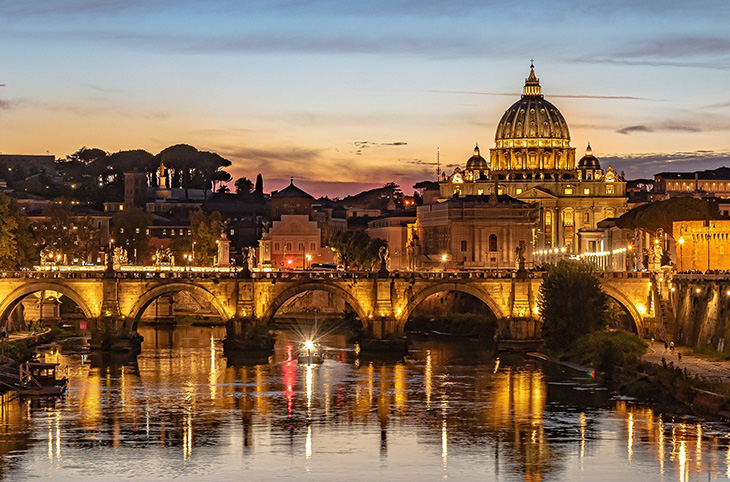
Surely, what you will love about this film is the representation of Rome. Baroque, magnificent, decadent, and corrupt, the capitol becomes a gallery of characters first monstrous, then celestial. The main character slowly gets rid of his masks, of people, to go with what is “Essential”.

2. Il giovane favoloso (Leopardi)
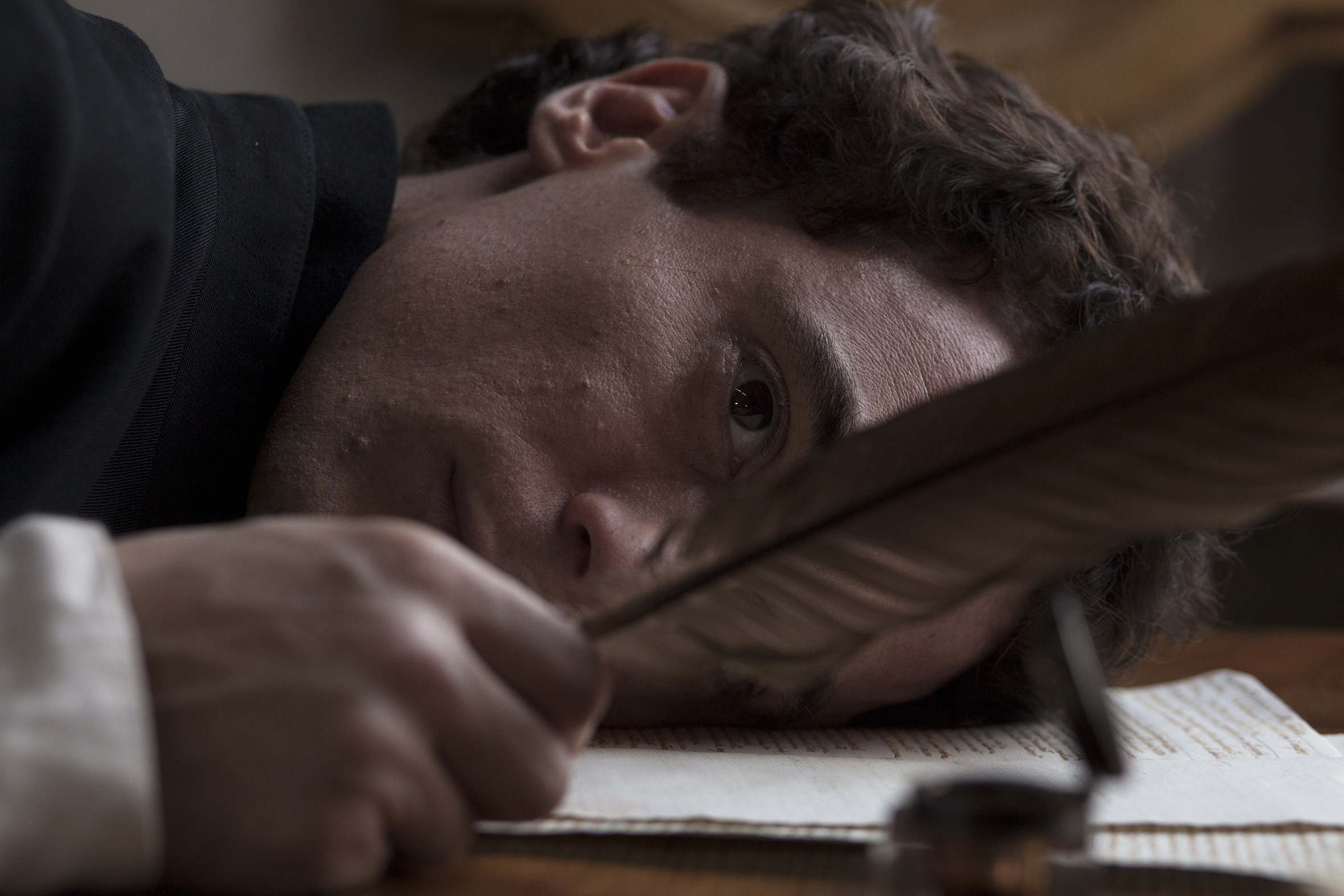
In second position we find “Leopardi”, a 2014 movie by Mario Martone.

With its 71st Venice International Film Festival nomination, this is surely a Movie in Italian worthy of being seen. If you are passionate about Italian culture and literature you will learn a lot about Giacomo Leopardi.

Il giovane favoloso (“The fabulous young man”) is not only a careful representation of the most famous Italian poet’s life, it makes us relive the drama of his existence.

Indeed, through a “journey” full of feelings, Martone gives us the opportunity to meditate on the human condition. You can feel his desire of knowledge, of entering high society and his inability to adapt to life. Moreover, all the evocative shots will make you empathize with Leopardi’s feelings with a rare sensitivity.

For sure, the vision of this movie will change you. It is not only a powerful journey into the mind of one of the greatest Italian poets,  but it is also an exploration of the individual and personal struggles affecting humanity.

After viewing this movie, you will be richer, emotionally and linguistically speaking!

3. Youth – La giovinezza (Youth)

Third place is another Sorrentino production: “Youth”, released in 2015. I had to list it as one of the Movies in Italian that you cannot miss!

The plot is simple. Fred and Mick are two old friends on vacation in an elegant hotel at the foot of the Alps. Here, they enjoy the company of Leda, Fred’s daughter. Every day, they spend time thinking about the future, observing with curiosity the lives of their children and the hotel guests.

4. L’arte della felicità (The Art of Happiness)

The Art of Happiness” is a 2013 Italian animated movie in Italian. The director is Alessandro Rak, a rising star of Italian animation.

Sergio is a Neapolitan taxi driver. Every day, with his taxi, he takes his customers through the city in the rain. At the same time, he tries to come to terms with a painful loss: the death of his brother Alfredo, who has never returned from a trip to Tibet that began ten years earlier.

One after the other, a singer, a radio speaker, an old uncle, and other characters take turns on the seats of his taxi. To make matters worse, each of them gives him a trace of his missing brother. 

Surely, it is not only an animated movie. It is a mix of colors, music, and feelings. You will walk through an unusual rainy Naples, ending with a sense of happiness and joy for life.

5. Lo chiamavano Jeeg Robot (They Call Me Jeeg)

Another movie in Italian that superhero lovers cannot miss is definitely: “They Call me Jeeg”. It is a 2015 film of Gabriele Mainetti, and it had great success in Italy.

The title comes from “Jeeg robot of steel” by Gō Nagai. Indeed, one of the main characters believes that Hiroshi Shiba, the hero of the series, exists in the real world. In fact, she identifies him with the main character of the movie.

Once again, it takes place in Rome. The thief Enzo Ceccotti, in order to escape the police, throws himself into the waters of the Tiber. Here, some radioactive substances give him an extraordinary power. Starting from that moment his life will never be the same…

Contrary to what one might expect, the story focuses on a totally unimaginable reality: poor people with no perspective other than trying to stay alive, abused girls, criminals looking for a crazy redemption…

6. Dogman

The list of the Best Movies in Italian continues with “Dogman”, a 2018 movie by Matteo Garrone.

First, you need to know that the movie recalls the “Canaro” crime. It was the murder of the criminal and amateur boxer Giancarlo Ricci, which took place in 1988 in Rome. The murderer was Pietro De Negri, known as “er canaro” ( “someone who has a dog” in the Roman dialect).

Marcello is a small and meek man who owns a dog grooming room. To make more money, he sells cocaine: this leads him to establish a murky friendship with Simone, a local criminal. However, Simone terrifies the locals with petty crimes and acts of violence, and Marcello cannot rebel. Taking advantage of his mild character, Simone ends up stealing and sending his innocent “friend” to prison.

During the Cannes Film Festival 2018, “Dogman” received positive reviews… You will not regret watching this movie!

7. Perfetti sconosciuti (Perfect Strangers)
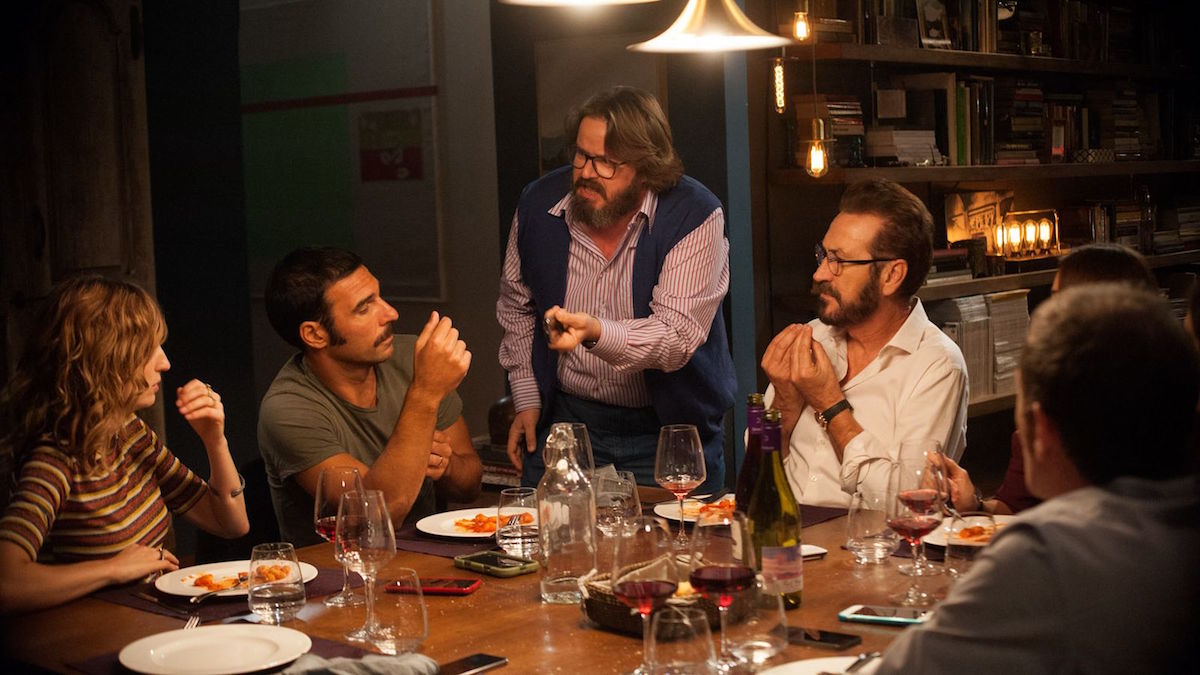
Possibly one of the best Movies in Italian is “Perfect Strangers”. It is a 2016 comedy by Paolo Genovese and once again set in Rome.

A group of friends meets for dinner and decide to share messages and incoming phone calls on everyone’s cell phones. During the evening, secrets and lies come to light that endanger the stability of their friendship.

Surprisingly, the direction and acting in this Movie are impeccable. Moreover, despite the delicate situations, there is no lack of irony and even relaxed moments that will make you laugh.

8. Gatta Cenerentola (Cinderella The Cat)

Once again, another of the best Animated Movies in Italian is directed by Alessandro Rak: “Cinderella The Cat”. The title of the Movie is of course inspired by the homonymous fairy tale by Giambattista Basile and Roberto De Simone’s play.

However, the plot is undoubtedly revisited. Mia, orphan of a famous shipowner, is a prisoner of her stepmother and must submit to the abuses of six half-brothers. But a brave young man, friend of her deceased father, tries to save her and bring the law back to the city.

In a setting that isn’t at all fairytale or childish, “Gatta Cenerentola” re-proposes the famous fairy tale in its most distinguishable characters (the shoe, the stepmother, the stepsisters), but sets it in a dark and surreal Naples. 

9. Allacciate le cinture (Fasten Your Seatbelts)

https://www.youtube.com/watch?v=Jvf3RoGtYBI

“Fasten Your Seat Belts” is a 2014 film directed by Ferzan Özpetek.

This time, the Movie is set in Lecce, where Elena works as a waitress in a bar and has a group of friends with whom she spends her days. One day, by chance, she meets Antonio, uneducated and apparently homophobic and racist. The two try to resist the attraction that pushes them towards each other.

Also, the music is noteworthy: the original music of the film is composed by Pasquale Catalano. In addition to the music of Catalano, the soundtrack includes the song A mano a mano” (hand by hand) by Riccardo Cocciante in the version sung by Rino Gaetano, that is in the trailer of this Movie.

10. Tutta colpa di Freud (All Freud’s Fault)

The last of the top 10 Best Movies in Italian is “All Freud’s Fault”, a 2014 film directed by Paolo Genovese.

Francesco Taramelli is a middle-aged analyst struggling with the problems of his three daughters. The oldest is a bookseller who falls in love with a thief, the middle one is a lesbian who decides to become straight, the youngest is an eighteen-year-old who goes nuts for a fifty-year-old.

In addition, you will be interested to know that a TV series was also made, starring the famous actor and comedian Claudio Bisio.

So, this could be another great series to watch and to add to your list of 30 Italian TV Shows You Can Watch In The US !

This was the list of 10 Most Recent Movies in Italian that had the greatest impact in recent years in Italy in terms of the public and critics’ favor.

Enjoy!
Essere Conjugation – Learn how to use essere in Italian

Essere conjugation – Extremely useful

One of the very first steps when learning Italian is to learn the conjugation of Essere.

Essere is the most common verb in Italian. It literally means to be, to exist and you will basically need it to say everything in Italian, like:

  • sono americano – I’m American
  • sono felice – I’m happy
  • sono stato in Italia – I’ve been in Italy

So, what are you waiting for? You need to learn this verb right now! Here below you will find tables with all Essere Conjugations with examples. And in the last paragraph you will also learn more ways to use it.

Let’s start with the tenses of the Indicative mood.

Essere Conjugation – Presente 

First thing to know is that Essere follows an irregular conjugation, meaning that you can’t apply the rules of regular verbs when conjugating it, but you need to learn it by heart:

Io sono I am
Tu sei You are
Lui / Lei è He / She is
Noi siamo We are
Voi siete You are
Essi sono They are

Sono molto stanca. – I am very tired. Same as in English, Italians use the present tense to express habits, general rules, or actions that are happening right now.

Lui è a Parigi? –  Is he in Paris?
Siete a casa. – You are at home.

Usually it’s not necessary to use the pronouns (io, tu, lui, lei, noi, voi, loro) before the verb in Italian. You can just use the verb without pronouns and your sentence will make sense because, as you can see from the table above, each person has its own form.

Even with sono the context always shows whether it means “I am” or “They are”:

Sono americano – I am American.
Sono americani – They are American.

Essere Conjugation – Imperfetto

Io ero I was
Tu eri You were
Lui / Lei era He / She was
Noi eravamo We were
Voi eravate You were
Essi erano They were

This tense is used to describe events that happened continuously in the past on a regular basis, to make descriptions in the past and to talk about feelings in the past.

Quando ero bambina andavo in Italia ogni estate. – When I was a kid, I used to go to Italy every Summer.
Eravamo molto felici quando Marco è arrivato. – We were very happy when Marco came.
Era una bella giornata, c’era il sole e non pioveva. – It was a beautiful day, it was sunny and it wasn’t raining.

Essere Conjugation – Passato Prossimo 

Io sono stato I have been
Tu sei stato You have been
Lui / Lei è stato/a He / She has been
Noi siamo stati We have been
Voi siete stati You have been
Essi sono stati They have been

Passato Prossimo is the main past tense in Italian , you need to use it when talking about events happened in the past, when talking about what have you done this morning, yesterday, one year ago and so on.

Siamo stati benissimo insieme. – We had a great time together.
Lui è stato molto fortunato. – He was very lucky.
Sono stato in Italia l’anno scorso. – I’ve been in Italy last year.

Essere Conjugation –  Futuro Semplice 

Io sarò I will be
Tu sarai You will be
Lui / Lei sarà He / She will be
Noi saremo We will be
Voi sarete You will be
Essi saranno They will be

The future tense in Italian is used to express an action that has yet to happen. If you want to know more about it, check it out here.

Some examples:
Sarò in ritardo, potete cominciare senza di me? –   I will be late, can you start without me?
Andiamo a Salerno domani? Sarà una bella giornata. – Are we going to Salerno tomorrow? It will be a beautiful day.
Un giorno saranno famosi. – One day, they will be famous.

Essere Conjugation – Passato Remoto 

Io fui I was
Tu fosti You were
Lui / Lei fu He / She was
Noi fummo We were
Voi foste You were
Essi furono They were

Passato remoto is very often found in literature and history books. It’s used to express actions that happened a long time ago. It can be very useful to recognize it, even though you don’t need to use it, you can use passato prossimo instead.

Molti libri furono perduti durante l’incendio – Many books were lost in the fire.
Dante Alighieri fu il più importante scrittore italiano. – Dante Alighieri was the most important Italian writer.

Essere Conjugation – Trapassato Prossimo 

Io ero stato I had been
Tu eri stato You had been
Lui / Lei era stato/a He / She had been
Noi eravamo stati We had been
Voi eravate stati You had been
Essi erano stati They had been

This tense is used to say that something happened before another event in the past. For example:

Non eravamo mai stati a Roma prima. – We had never been to Rome before.
Sono andata al supermercato anche se ci ero già stata stamattina – I went to the supermarket even though I had already been there this morning.

Essere Conjugation – Trapassato Remoto

Io fui stato
Tu fosti stato
Lui / Lei fu stato/a
Noi fummo stati
Voi foste stati
Essi furono stati

To be honest, you won’t need to use this tense, you may see it in literature or story books. It is used to talk about an event in the past that has happened before another event in the passato remoto.

Essere Conjugation – Futuro anteriore

Io sarò stato I will have been
Tu sarai stato You will have been
Lui / Lei sarà stato/a He / She will have been
Noi saremo stati We will have been
Voi sarete stati You will have been
Essi saranno stati They will have been

Same as futuro semplice, futuro anteriore is used to express a future action. But in this case the action happened before the futuro semplice. See the example:

Quando sarò stato in Italia almeno una volta, allora dirò di conoscerla.
When I will have been to Italy at least once, then I will say that I know it.

You could also use the futuro semplice instead.

Essere Conjugation – Condizionale Presente

Io sarei
Tu saresti
Lui / Lei sarebbe
Noi saremmo
Voi sareste
Essi sarebbero

The conditional is used to express an intention, will, or polite request. It’s used to express an action that would happen but depends on certain conditions. If you want to know more about this tense, click here.

Sarebbe bello. – It would be nice.
Se fossi un uomo ricco, sarei molto felice. – If I were a rich man, I would be very happy.

Essere Conjugation – Condizionale Passato 

Io sarei stato
Tu saresti stato
Lui / Lei sarebbe stato / a
Noi saremmo stati
Voi sareste stati
Essi sarebbero stati

Sarei stato contento di vederti – I would have been happy to see you

Essere Conjugation – Congiuntivo Presente

The Subjunctive mood, or Congiuntivo in Italian, is not very used in English. It’s a mood of possibility and it is used to express uncertainty, hopes, and fears. It usually come after che.

Che io sia I am
Che tu sia You are
Che lui / lei sia He / She is
Che noi siamo We are
Che voi siate You are
Che essi siano They are

Examples:

Farò il mio meglio affinché tu sia contenta. – I will do my best so that you are happy.
È meglio che loro siano soddisfatti. – It’s better if they are pleased.
Penso che lui sia molto stanco. – I think he is very tired.

Essere Conjugation – Congiuntivo Imperfetto

Che io fossi (that) I were
Che tu fossi (that) you were
Che lui / lei fosse (that) he / she were
Che noi fossimo (that) we were
Che voi foste (that) you were
Che essi fossero (that) they were

Vorrei che tu fossi più sincera. – I wish you were more honest.We use Congiuntivo Imperfetto when the main clause has past tense, conditional tense or imperfect tense.

Speravo che questa volta non fossimo in ritardo. – I hoped that this time we wouldn’t be late.
Sarebbe meglio se lui fosse più interessante. – It would be better if he was more interesting.

Essere Conjugation – Congiuntivo Passato 

Che io sia stato I have been
Che tu sia stato You have been
Che lui / lei sia stato/a He / She has been
Che noi siamo stati We have been
Che voi siate stati You have been
Che essi siano stati They have been

Example:
Penso che sia stato facile – I think it has been easy

Essere Conjugation – Congiuntivo Trapassato

Che io fossi stato
Che tu fossi stato
Che lui / lei fosse stato/a
Che noi fossimo stati
Che voi foste stati
Che essi fossero stati

Example:
Se tu fossi stato più attento, non saresti caduto
If you had been more careful, you would not have fallen

Essere Conjugation –  Imperativo

Using this mode in Italian we can give an order or instructions. Essere has its own forms even here. More about the imperative you can learn here.

Tu sii
Lui / Lei sia
Noi siamo
Voi siate
Essi siano

Non ti preoccupare, sii felice – Don’t worry, be happy.
Siate prudenti! – Be careful!

Essere Conjugation –  Infinito

Present Past
Essere Essere stato

Examples:
Essere o non essere? – to be or not to be?
Ho capito di essere stato uno sciocco  – I realized I have been a fool

Essere Conjugation – Participio

Present Past
Essente Stato

While essente is almost obsolete, stato is used in the compound tenses of Essere, as you may have noticed from the conjugations.

Essere Conjugation – Gerundio

Present Past
Essendo Essendo stato

You can learn more about the gerund here.

essere conjugation

How do you use essere in Italian?

As we already mentioned, essere means to be, to exist. We use it to express who we are, to describe our mood and how we feel.

Same as in English, we use ESSERE to:

  • say our name
  • describe how we feel
  • talk about our profession
  • describe someone or something
  • describe where something is located
  • ask about the time

Let’s take a look at these examples:

  • Io sono Marco. – I am Marco.
  • Lui è molto triste perché ha perso le chiavi. – He is very sad because he lost the keys.
  • I miei genitori sono italiani, invece io sono nata negli Stati Uniti – My parents are Italian, but I was born in the US
  • Mia sorella è insegnante. – My sister is a teacher.
  • La ragazza di Luigi è veramente simpatica. – Luigi’s girlfriend is very nice.
  • Questi libri sono nuovi e sono molto utili. – These books are new and very useful.
  • Noi siamo a casa, e voi dove siete? – We are at home, and where are you?
  • Il Colosseo è a Roma. – The colosseum is in Rome.
  • Che ore sono? Sono le otto. – What time is it? It’s eight o’clock.

Other uses of essere

Esserci: there is – there are

With pronoun CI we use essere to indicate the presence. Same as in English “there is” or “there are”.

C’è un libro sul tavolo. – There is a book on the table.
Fammi sapere se ci sono problemi. – Let me know if there are problems.

Essere di: to be from

Di dove sei? Sono di New York.
Di dov’è tuo cugino? Lui è di Roma.

Essere as auxiliary verb

The verb essere is also an auxiliary verb. That means that, together with the verb avere, it is used to form the compound tenses (composed of the auxiliary verb + the past participle), such as passato prossimo, congiuntivo passato or futuro anteriore.

Sono arrivata ieri a Milano. – I arrived yesterday in Milano,
Quando sarà entrata nella camera, vedrà la sorpresa. – When she enters in the room, she will see the surprise.

Comparisons with English

Essere, o non essere, questo è il dilemma! – To be, or not to be, this is the problem!

A part of the essere conjugation that should be learned by heart, the use of the verb Essere seems pretty easy and almost the same as in English. However, there are exceptions to which you should pay attention to.

Do NOT use essere to say :

  • the age
  • how you are
  • what you are doing in the moment

Let’s see what verbs to use in these situations instead.

Italians won’t say: “I am 25 years old.” They would say: “I have 25 years.” Instead of the verb essere they use the verb avere (to have).

Quanti anni hai? Ho 25 anni. – How many years do you have? I have 25 years.

If you want to ask an Italian “How are you?” you won’t use the verb essere but the verb stare. Please check out here the difference between essere and stare.

Come stai? Sto bene, grazie. – How are you? I’m good, thank you.

If you want to talk about an action that is happening right now, you won’t use the verb to be as the English expression “to be doing something“. Instead, to make the continuous form in Italian is used the verb stare.

Sto parlando al telefono. – I’m talking on the phone.
Cosa stai facendo? – What are you doing?

To conclude, if you want to practice Italian Grammar and tenses here is a list of useful books for you: