Italian Easter traditions and vocabulary
Taking part in Italian Easter traditions and celebrations is a good start to deepen one’s Italian language and culture knowledge.
what is Italian Easter?
As a matter of fact, Easter in Italy is a very important feast and it is second only to Christmas. Besides, the various Italian Easter traditions have ancient roots and are deeply felt by all Italians. Actually, Easter Sunday is just the tip of the iceberg. In fact, the week before Easter is full of subsequent events. And generally,whether one’s religious or not, pretty much everyone takes part in them.
For this reason, I decided to share with you everything I know about Italian Easter traditions and vocabulary. Hopefully, if you pop around here in Italy during Easter time, you will find it of some help.
So, let’s get started!
How to celebrate the Italian Easter or Pasqua
As you probably already know, Easter is one of the movable feasts and its day depends on the lunisolar calendar.Undoubtedly, Easter always falls in Spring and the link between the two is very tight.
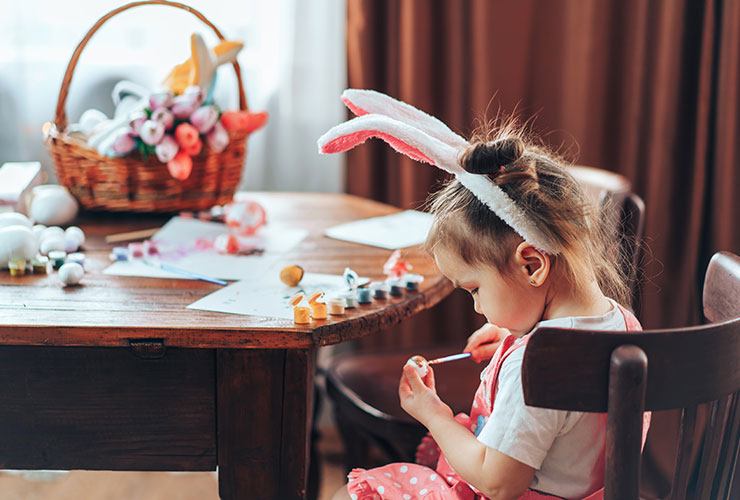
Indeed, as Spring represents the rebirth of nature after Winter, Easter celebrates the victory of life over death. Thus, both are synonyms of joy and hope. Consequently, in Italy you will feel and see this glee in the houses. As a matter of fact, one of the Italian Easter traditions is to decorate them. Usually, people create the Easter Trees and buy numerous colourful ornaments.
Additionally, the kitchens are full of delicious food and chocolate eggs. Importantly, in Italy there is no Easter Bunny or Egg hunt, but we give children chocolate eggs as presents.
Just to be clear, there is not a proper age for a chocolate egg. Personally, I’ll always want my chocolate egg, even in my 90ies. Come ‘on, who doesn’t want chocolate?
Here there are some useful books for you:
Vocabulary related to Italian Easter traditions
Below, you will find the most common words that you can use to talk about Easter in Italy.
- La Pasqua – Easter.
To wish “Happy Easter!” you say “Buona Pasqua!”.
- La Resurrezione – The Resurrection.
- L’Agnello – The Lamb.
Actually, this animal is the symbol of Jesus who sacrificed His life to save humans. Therefore, it is one of the main Easter foods. In fact, it is not just a second dish, but pastry shops also realize chocolate and sugar lambs.
- La colomba – the dove, symbol of peace.
- L’uovo – the egg, symbol of new life.
Italian traditional Easter decorations
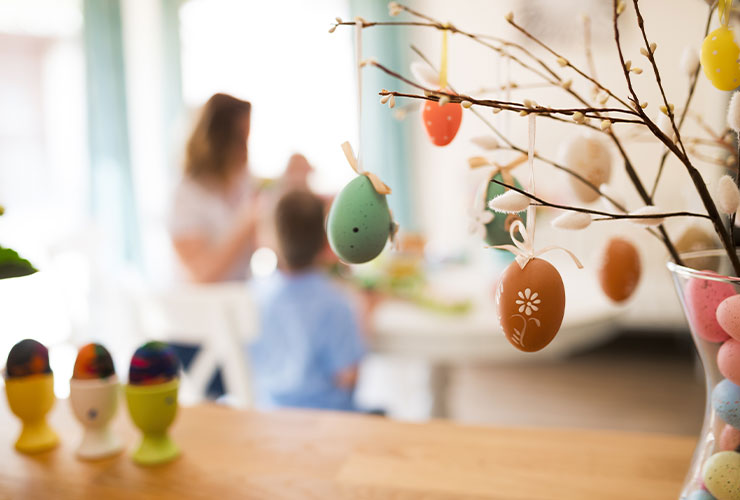
Here you will find some of the things most likely to be in every Italian house during Easter time.
- La Decorazione – The decoration, ornament.
- L’Albero di Pasqua – The Easter Tree. Briefly, it is an olive branch decorated with hand-painted eggs, colorful bows and paper’s doves.
- L’uovo di ceramica – the pottery egg. Actually, you will find pottery eggs of all sizes, colours and functions.
- La Candela a forma di uovo – egg-shaped candle.
- Il lavoretto di Pasqua – the Easter kids’ crafts made at school. Indeed, parents show with great pride their kid’s crafts.
Italian traditional Easter food and gift
- L’Uovo di cioccolato – The chocolate egg. As we said above, eggs represent the new life. Therefore, pastry shops and food firms created the chocolate egg tradition. Also, a little surprise is ceiled in it.
- La Gallina di cioccolato – Chocolate chicken. Similarly to the chocolate eggs, the chocolate chickens are a widespread Easter gift.
- Il Coniglio di cioccolato – Chocolate bunny. Even if Italian children don’t believe in the Easter Bunny, its chocolate representation is an appreciated Easter gift.
- La Colomba pasquale – Easter dove. Namely, a dove-shaped cake with candied fruits or other creamy fillings exchanged as an Easter gift. Particularly, the Colombe artigianali (artisanal doves) are very much appreciated.
Easter Monday or Pasquetta in Italian
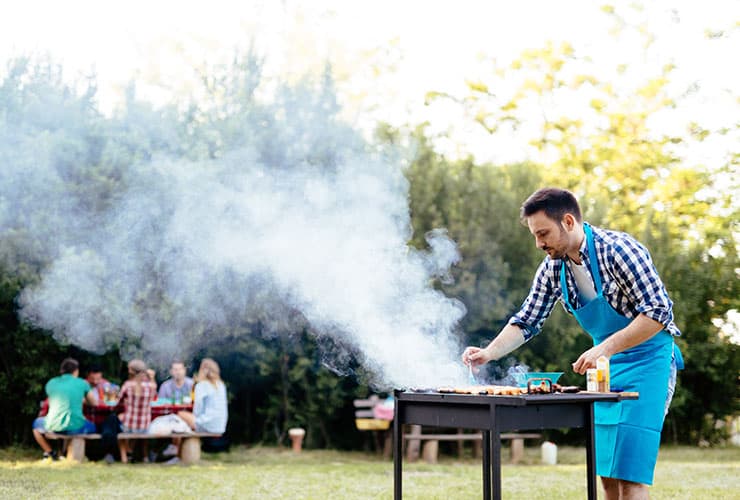
A crucial Italian Easter tradition is Pasquetta (literally Little Easter) or Easter Monday in English. Actually, in Italy it is also called Lunedì dell’Angelo (Angel’s Monday). In fact, it commemorates the Angel who showed up to the pious women announcing Jesus’ resurrection.
Typically, for this Italian Easter tradition people organize excursions, pic-nics, lunch at farmhouses or visits to museums. Actually, the organization is not easy peasy. In fact, a great number of people with different preferences are involved. Hence, you have to come to an agreement about where to go and what to buy. Briefly, it is exhausting, but it is more than worth it.
Nonetheless, there is always a little detail that ruins the Italian Pasquetta: the weather. Really, there is a sort of spell on this day as it always rains. However, we don’t give up! On the contrary, we usually postpone our plans to the next day.
Useful vocabulary to talk about Pasquetta
Here, I leave you the words we use the most on Pasquetta.
- Il pic-nic – the pic-nic. Of course, we’re not talking about a frugal meal! On the contrary, in every region there is a wide range of traditional food.
- La carne grigliata – grilled meat.
- La salsiccia – the sausage.
- La mozzarella – the Mozzarella cheese.
- Il formaggio – the cheese.
- Il pane – the bread.
- Il vino – the wine.
- L’acqua – the water.

Also, there are always the following objects:
- Una palla – a ball.
- Le carte – the playing cards.
- Una griglia – a barbecue or a broiler/grill pan.
- La musica – music.
- Una chitarra – a guitar.
- I piatti/bicchieri e le posate riciclabili usa e getta – disposable recyclable plates/cups and cutlery.
- I tovaglioli di carta– the paper napkins.
- Un apribottiglie – a bottle opener.
Finally, on this day you can:
- Fare una gita fuori porta – to take a day-trip out of town.
- Prenotare un tavolo in un agriturismo – to book a table in a farmhouse.
- Fare visite culturali – to go on cultural visits.
Palm Day or Domenica delle palme in Italian
Another significant Italian Easter tradition is Palm Day, the Sunday that marks the beginning of the Holy Week.
Traditionally, it celebrates the triumphal entry of Jesus into Jerusalem. On this occasion, people welcomed Christ waving palm branches, symbolizing victory. For this reason, on Palm Day people in Italy reenact this event. In fact, they organize a procession where the priest personifies Jesus and the people welcome him with their palms.
Then, the priest blesses the palms and together with the crowd goes back to the church to celebrate mass. Eventually, people exchange palms as a good wish.
Useful vocabulary to talk about Palm Day
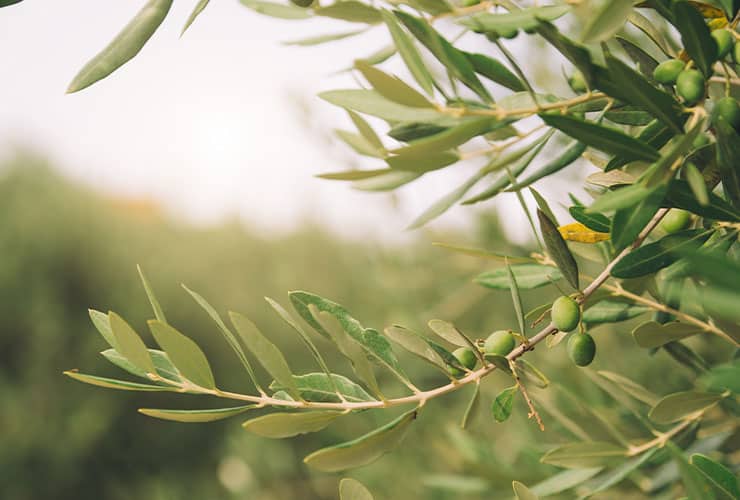
Here you will find the important features of the Italian Palm Day.
- La Domenica delle Palme – Palm Day, but literally “Sunday of the Palms”.
- La Palma di confetti -the Sugared-almonds’/comfits’ palm. To be clear, this is a tradition of the southern regions of Italy. Indeed, here grandmothers create stunning flower-shaped palms with colourful comfits and other decorations.
- La Palma di ulivo – Olive branches palm.
Actually, it could be a small olive branch or olive’s leaves weaved. As a matter of fact, southern boys prefer this kind of palm.Usually, on Palm Day you will see kids walking with a huge olive branch full of salami and caciocavallo cheese. Weirdly enough, we put food on branches!
- La Benedizione – The Blessing.
- La Chiesa – the Church.
- La Processione – the Procession.
- La Messa – the Mass.
- Il Prete – the Priest.
- La Settimana Santa – the Holy week. It is the week preceding Easter.
Good Friday or Venerdì Santo in Italian
Among the Italian Easter traditions an important one is the celebration of Good Friday. On this day, we commemorate the crucifixion of Jesus on Mount Calvary. Actually, in a great number of Italian cities there are displays recalling the last day of Christ on Earth.
For example, in the South of Italy the Via Crucis is the most important event of the Holy Week. Specifically, it is the reenacting of the sorrowful path of Christ up to Mount Calvary. For this procession, people wear Roman costumes and the streets’ lights are turned off. In fact, only a few candles and tapers light the path. Additionally, silence reigns and it is broken only by drums and choirs. Indeed, one of the most emotional ones is the so-called Miserere, a chorus with only men singing in Latin.
Usually, the Via Crucis takes place late at night, with some lasting till 3 A.M. Really, it is one of the most suggestive Italian Easter traditions and requires a long organization.
Vocabulary of Good Friday
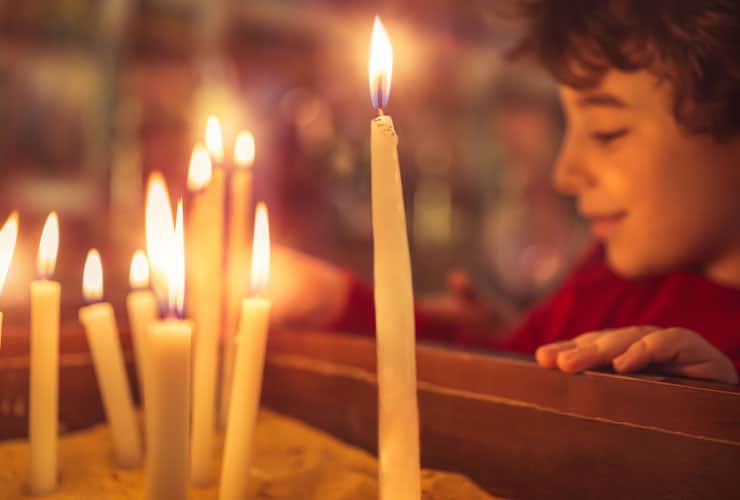
Now, in case I made you curious let’s see how to talk about Good Friday.
- Il Venerdì Santo – Good Friday.
- La Passione di Cristo – The Passion of Christ. In this case, the word passione indicates the suffering of Jesus. However, it is commonly used as “love for something, enthusiasm, fondness”.
- La Crocifissione – The Crucifixion, from the word croce, cross.
- La Campana – The Bell.
- La Rappresentazione – The representation, performance, display.
- La Via crucis – The Stations of the Cross or the Way of the Cross. Usually, it refers to the images of the subsequent steps of Christ’s crucifixion day. In this case, it refers to the procession organized on Good Friday.
- Il Cammino – The path.
- Il Costume – The theatrical costume, here. However, be careful with this word because in Italian it usually means swimsuit.
- La Candela – the candle.
- La Torcia (Le torce, pl.) – The taper.
- Il Miserere – The Misere. The name of this choir comes from the Latin imperative miserēri which means “abbi pietà”, have mercy.
- Il Coro – The choir.
- Il Tamburo – The drum.
Maundy Thursday or Giovedì Santo in Italian
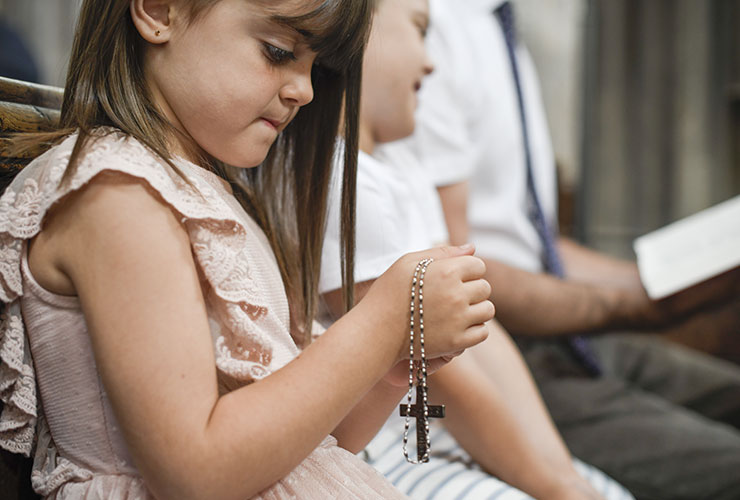
Maundy Thursday is another important Italian Easter tradition. On this day, in the churches reenactments of the Washing of the Feet and the Last Supper take place. This day marks the beginning of the Easter Triduum, which commemorates the passion, death and resurrection of Jesus.
Additionally, in southern regions on this day there is Italian Easter tradition called i Sepolcri (literally sepulchres, graves). Basically, faithfuls visit from 5 to 7 churches in which altars are adorned with flowers and sprouts of wheat.
Vocabulary related to Maundy Thursday.
Let’s see the relevant vocabulary of this celebration.
- Il Giovedì Santo – Maundy Thursday, but literally Holy Thursday.
- Il Triduo pasquale – Easter Triduum. Specifically, the word triduo comes from the number tre, three. In fact, it refers to the fact that the Triduo lasts three days (Maundy Thursday, Good Friday and Holy Saturday).
- La Lavanda dei piedi – the Washing of the Feet. Here, the noun lavanda comes from the Italian verb lavare, to wash. However, remember that the Italian word lavanda could also mean “lavender”.
- Il Sepolcro – the Sepulchre, grave.
- L’Ultima Cena – the Last Supper.
- Il Germoglio di grano – Wheats’ Sprout.
Lent, Quaresima in Italian
When talking about Italian Easter traditions, we couldn’t not mention Lent. As we also said in the Carnival’s article, Lent starts on Ash Wednesday and finishes on Easter day. Notably, it is a 40-days period of prayer and atonement (recalling the days Christ spent in the desert). Indeed, the Italian term Quaresima comes from the Latin quadr(ag)esĭma, meaning “quarantesimo giorno” (fortieth day).
Now, let’s see some useful vocabulary to talk about Lent.
- La Quaresima – The Lent.
- L’Espiazione – The atonement.
- La Preghiera – The prayer.
- Il Peccato – The sin.
- Il Digiuno – The fasting.
Common sayings linked to Italian Easter traditions
Obviously, the continuously evolving Italian language has created a lot of sayings focused on Italian Easter traditions. Clearly, they originate from the deep meaning these traditions have.
So, scroll down to learn useful sayings that will allow you to fluently speak with Italians.
Italian saying about Lent
To begin, let’s see a couple of sayings associated with Lent, Quaresima:
- Lungo come una quaresima. – Literally, “long as a lent”. This expression describes either a person who talks too much or a long-lasting unpleasant situation.
- Ha sciupato tutto e adesso fa Quaresima. – Literally, “He/she has wasted everything and now does the Lent”. Here, we are talking about a person who spent all money and is now poor.
Italian sayings linked to Good Friday
Now, the following sayings are based on the figurative meaning of the cross. Let’s see them!
- Essere la croce di qualcuno. – To be someone’s cross, that is being someone’ burden.
- Mettere in croce – to crucify.
- Gettare la croce addosso a qualcuno. – to put blame on someone. Literally, it is “To throw the cross on someone”.
- La mia vita è un calvario. – Literally, my life is an ordeal. Clearly, we use this expression when we have a very tough life.
- La croce che ci si fa da soli è la più pesante. – The translation is “the cross that you make yourself is the heaviest”. Often, we use this saying when we do things we regret and of which we have to face consequences.
- Portare la propria croce. – Literally, “to carry one’s cross”. Indeed, we use this expression when we take our responsibilities.
Italian sayings linked to Easter

Finally, here’s a couple of sayings related to Easter:
- Essere felice come una Pasqua. – To be happy as can be. Literally, “To be as happy as Easter”.
- Natale con i tuoi, Pasqua con chi vuoi. – Literally, “Christmas with your family and Easter with whoever you want”. Indeed, this saying refers to the fact that usually people spend Christmas at home. On the contrary, during Holy Week some people prefer to go on vacation.
Conclusion
In conclusion, we have seen how Italian Easter traditions are deeply rooted and felt by Italians.
Indeed, from religious celebrations, to historical displays and food tradition, Easter permeates the Italian culture and language.
For this reason, every Italian language learner should think about coming to Italy to personally experience all the Italian Easter traditions. So what are you waiting for? Check when Easter is and book a flight!
We will wait for you. Ciao!