Ferragosto in Italy – How Italians celebrate Ferragosto

After Natale and Pasqua, Ferragosto is the third festivity Italians mostly appreciate overall. During this period of the year, Italian cities get empty, whereas beaches fill up welcoming people from all over the world. 

what is Ferragosto exactly?

Traditionally, Ferragosto is an Italian national holiday celebrated on 15th August. Its roots lie in ancient Rome under the emperor Augustus. As a matter of fact, Feriae Augusti – a set of feasts established by Augustus himself – had the purpose to provide Roman citizens a longer period of rest after the harvest. Later, after the fall of the Roman Empire and the rise of Catholicism, this festival was converted into a religious festivity commemorating the Assunzione, namely the Assumption of the Virgin Mary into Heaven.

Nevertheless, how and where do Italians celebrate Ferragosto? What do they like to do the most?

If you are curious enough to find it out, you better scroll down and read until the end of the present article! And if you are planning to visit Italy here there are some useful books for you:

how and where do Italians celebrate Ferragosto?

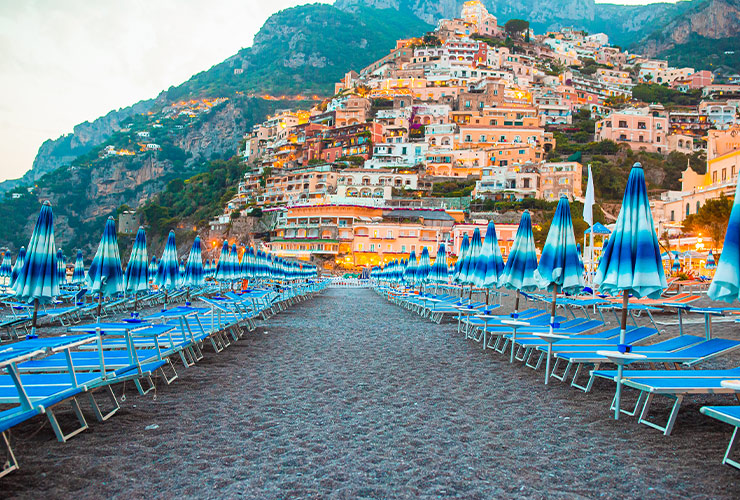
Relaxing on the beach 
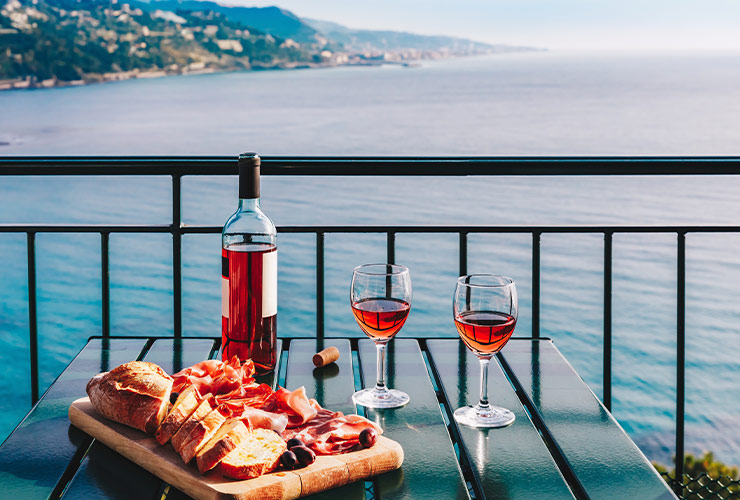
Ferragosto relaxing on the beach and with an Aperitivo during Summer in Italy

Spending Ferragosto vacations with family or friends on the beach is usually the very first choice. Indeed, most Italians literally “flee” from those cities that are dreadfully hot and sticky during the summertime – like Milan, Turin, Rome, Bologna, and so on-. On the contrary, people who live in coastal cities – such as Naples, Palermo, Bari, Rimini, etc. – can enjoy more pleasant and milder weather, as well as cooler temperatures. 

In any case, many events take place on the most famous Italian beaches, such as those of Adriatic Coast, Amalfi Coast, and Emerald Coast, during the day of Ferragosto: in the morning, they usually organize funny games for children, dancing and water aerobics sessions for young people and adults. Instead, in the afternoon, space is given to traditional Italian Aperitivo. On this occasion, you can have a tasty cocktail with your friends, listen to great music, and eat tons of appetizers and savory snacks. Finally, in the evening you have the chance to do lots of different things according to your tastes: going to a beach party, celebrating in an exclusive nightclub, going for a stroll downtown where you can be entertained with traditional music concerts, or eventually watching the fireworks around a bonfire. 

Fun fact: Are you wondering which is the representative song of the Italian summer? Of course Un’estate al mare by Italian singer Giuni Russo.            

Having a good time in the mountains 
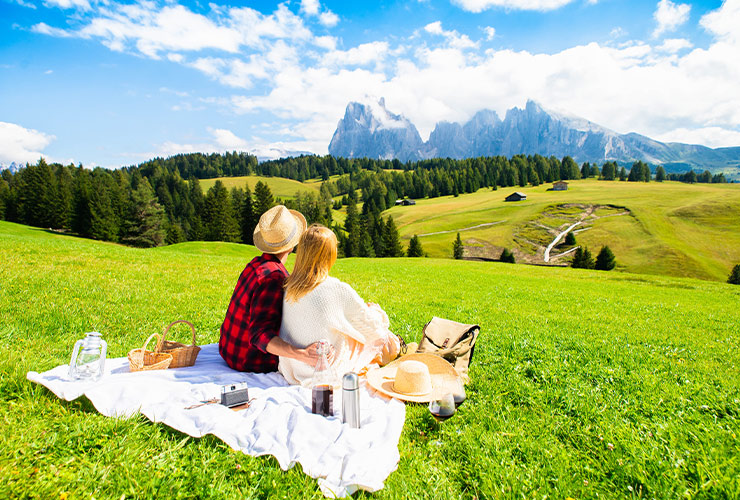
Ferragosto Having a good time in the mountains during Summer in Italy

In case you aren’t into the sea like a lot of Italians, mountains are the perfect alternative where to spend your Ferragosto! The most popular destinations for hikers and fresh air lovers are Alpes and Appennines, the two main mountain ranges in Italy. Here people have the possibility to explore wild areas along with expert tour guides, hike into the woods seeking appetizing mushrooms and truffles, or reach small mountain villages with breathtaking views. 

Plus, in some Italian regions where a vast production of wines normally appears – as in Piedmont, Tuscany, Campania, Sicily -, it is also possible to visit local wineries that often belong to wealthy families. In these places they provide you information about the various techniques used for making wine, focusing on grape pressing, fermentation, and aging; after that, the procedures of bottling and storage are shown. When the visit comes to an end, you are allowed to taste local wines, basically accompanied by delicious platters of cold cuts and cheeses. 

Exploring Italian lakes 
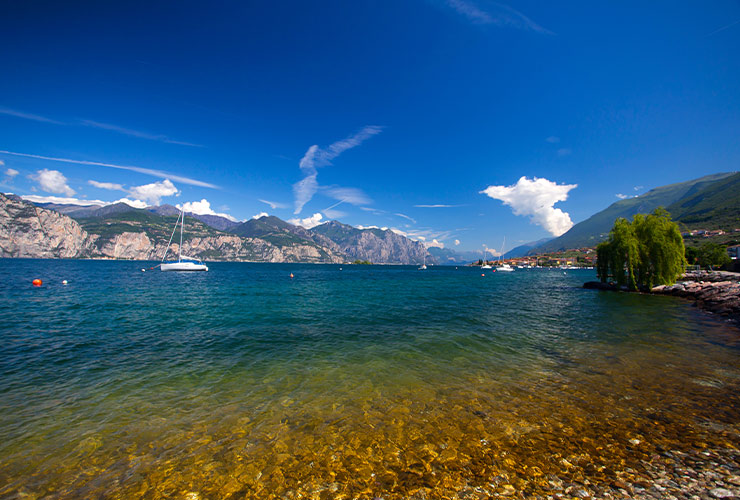
Exploring Italian lakes during Ferragosto and Italian Summer - Lake Garda

Another typical activity that some Italians really prefer doing during the day of Ferragosto is going to the lake. Just think of the huge amount of lakes scattered throughout Italy – for example, Lakes of Garda and Como in Lombardy, Lake of Bracciano near Rome, and Lake Trasimeno in Umbria. In these wonderful locations, it’s quite common to take a cruise around the lake itself, taste seafood dishes in a restaurant nearby, or sunbathing on the lake shores. 

Remember that it is also possible to fish but you need to get information previously because in some parts of Italy fishing is forbidden in specific periods of the year.     

Spending time in the countryside
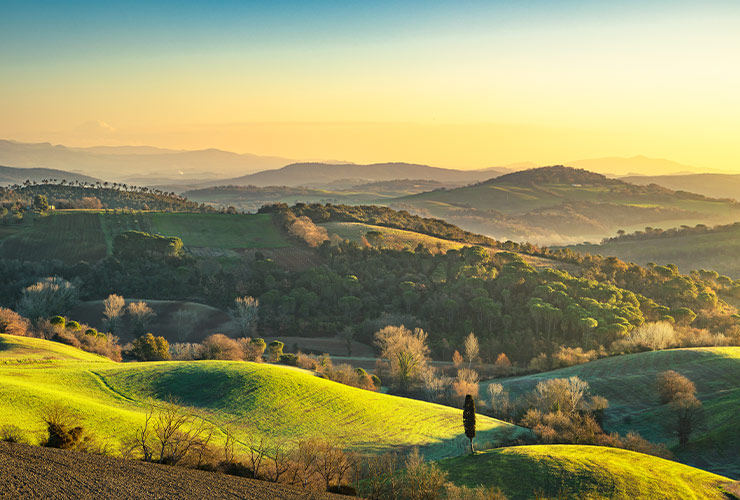
Spending time in the countryside during Italian Ferragosto and Summer - Tuscan Maremma

Not interested in spending your day of Ferragosto on the beach, in the mountains, or at the lake? Don’t worry about that, because an alternative to the proposals mentioned above exists: the countryside!

As you already know, Italy is full of countryside, hills, and plains. Hence, if you decide to head to the Tuscan Maremma or the Po Valley in summer, you could stop at a holiday farm to have a barbecue or at a trattoria – in English inn – where to enjoy wholesome food and later have a nap under the trees. For families with kids, they usually offer entertainment services and carousels. Alternatively, you might be hosted in farms or cottages where you can experience rural life. Here they give you the chance to hoe the ground, grow plants, and raise animals.

Wouldn’t it be great if you could feed hens or witness the birth of a calf? For nature enthusiasts, this would surely be something not to be missed! Additionally, you are able to drink homemade wine and eat healthy farm-to-table products. Lastly, you could choose to go for a ride in an open country. 

Fun fact: do you know there’s a very famous Italian film where the typical summer landscape of the Tuscan Maremma is displayed? Here is an excerpt from the movie Il Ciclone directed by Italian actor Leonardo Pieraccioni.   

Staying in town 
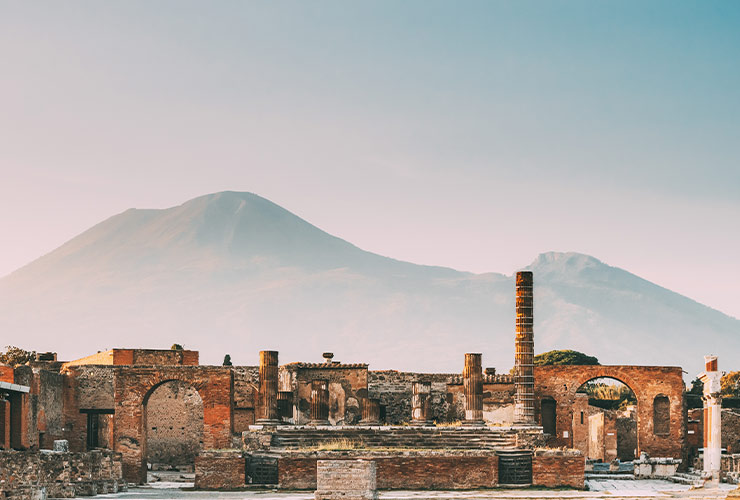
Staying in town in Ferragosto - Visiting Pompeii in Naples

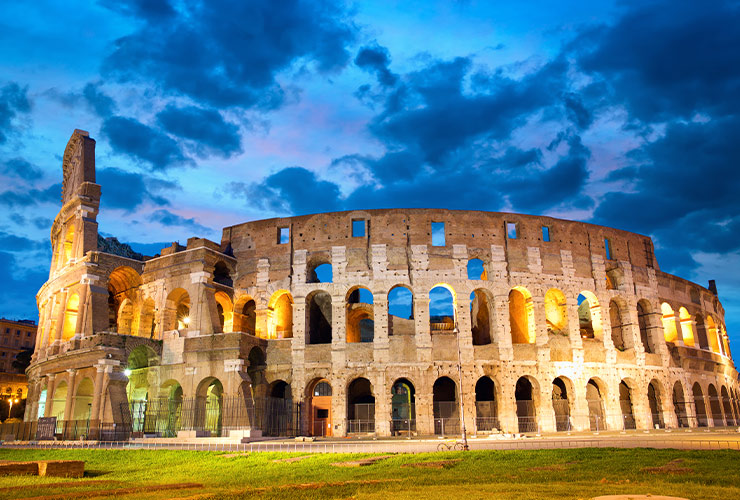
What if you didn’t manage to leave your home city on Ferragosto? Well, you need to know that most shops, businesses and public offices are closed for the summer break; even public transport is not in service. In fact, you could bump into signs like chiuso per ferie – literally closed for vacation – popping up all over the place. However, plenty of museums and cultural sites still stay open. Consequently, locals and tourists have the opportunity to visit major Italian attractions such as the Colosseum, Pompei ruins, Valley of the Temples in Agrigento, and other cultural institutions across the rest of Italy.

At the same time, city parks remain open during Ferragosto; on this occasion, people often go there carrying their picnic baskets. After putting a towel on the grass, they relax and eat in good company. Rather, when the air becomes cooler in the evening, you can drink some cocktails, have dinner – make sure that the restaurant you would like to go to is open! – or take a walk in the center. Even though there are few people and it’s hot, I’m sure you won’t regret the moment when you walked around an Italian city in loneliness! 

Anyway, you shouldn’t feel alone because different events take place in the squares of the main Italian cities.        

What do Italians eat and drink on Ferragosto?
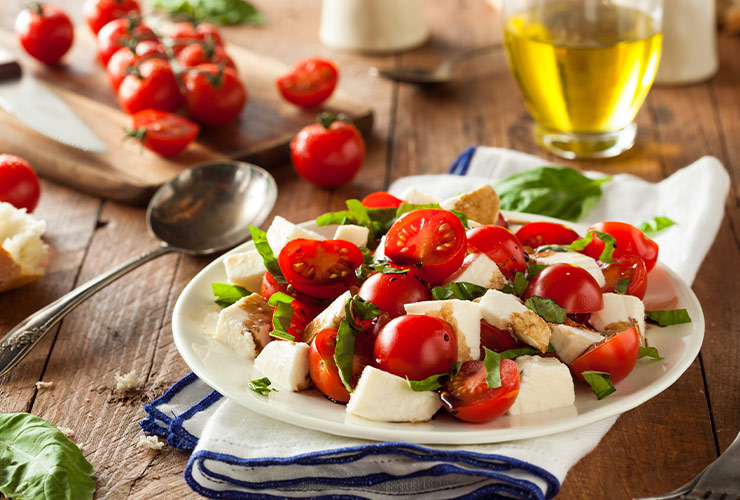
What do Italians eat and drink on summer?

Commonly, Italians are used to eating fresh and uncooked food such as mozzarella, tomato salad, ricotta, and cold meats in summer. Mostly, they eat a lot of fruit like watermelon, rockmelon, grapes, peaches, and so on. Regarding cold drinks, the most appreciated are iced tea, iced coffee, sodas, granita, and barley water. For some Italian foodies, eating fresh couldn’t be enough! For this reason, they opt for more flavourful dishes like eggplant parmesan, spaghetti omelet, rice salad, or pasta salad. Generally, they consume these foods on the beach or outdoors – this happens mainly in the south of Italy -. Wine must be present on the Italian table, too! In this regard, there’s a dessert that is very easy to make: peaches in red wine. Trust me, once you take a sip of this juicy drink, you won’t be able to get enough of it! 

Keep in mind that you can have all these meals I referred to until now during the entire summertime – more specifically from the end of May until the beginning of September -, not only on the day of Ferragosto.    

What Are Ferragosto Festivities and Traditions in Italy?
What Are Summer Festivities and Traditions in Italy?

As we already said previously, if you are unable to leave for vacation, or simply decide to stay in town, you won’t face problems spending your Ferragosto cheerfully because you’ll find dozens of celebrations all over Italy, including food, music, parades, and of course, fireworks. Here is a list of the 5 most popular Italian festivities taking place on 15th August.

Palio dell’Assunta in Siena 

First of all, we need to cite one of the most famous Italian manifestations occurring in Mid-August: Palio dell’Assunta in Siena. Celebrated on 16th August, it has its roots in the Middle Ages. During this day, the seven contrade – the plural form of contrada – challenge each other through horse races in Piazza del Campo, the main square in Siena. The winners of this tournament will gain the respect of the whole city and its inhabitants.

Gran Galà di Ferragosto at the Reggia of Venaria, Turin  

Secondly, we cannot fail to mention another important festivity related to this day: Gran Galà di Ferragosto at the Reggia of Venaria, near Turin. Tuxedo, refined people, Dj sets, and fireworks are the keywords to describe the stunning and sophisticated Royal Palace of Venaria where to celebrate Ferragosto with style and class.  

Festa dell’Assunta in Trappeto, Palermo  

In the third place, there’s another important feast attracting people from all over Italy on 15th August: Festa dell’Assunta in Trappeto, a small village near Palermo. During the religious procession at the sea, the statue of the Virgin Mary is put on a boat that is dragged through the entire coastline of the town whereas believers pray and follow it. Actually, in almost every coastal town this ritual occurs, especially in South Italy where a stronger religiousness exists.    

Rome’s Gran Ballo di Ferragosto 

Going on, it’s time now to introduce another significant Italian festival: Rome’s Gran Ballo di Ferragosto. If you think that a city like Rome will leave you alone on the day of Ferragosto, you are dead wrong because on 15th August the main Roman streets, districts, and squares – such as Via del Corso, Piazza del Popolo, Garbatella – fill up with live dance performances. While dancing, you can get something to eat and drink nearby, too.       

Fireworks Show in Rimini 

If you are looking for the most spectacular fireworks in Italy, you need to head to Rimini. Why so impressive? Because several beach clubs located on the Adriatic Coast are economically and practically involved in the organization of this unforgettable event. Surely, this fireworks show will keep you with your nose up the whole night!

A Midnight Swim 

Did you know many Italians are used to taking a swim on 15th August at midnight? Before doing that, some guys – principally youngsters – meet in groups and then go to the beach. When the clock strikes midnight, they take a dip together and have fun. 

Creepy fact: in South Italy, many people believe that you shouldn’t take a swim at midnight on Ferragosto because you might be cursed! In fact, in some coastal towns of southern Italy, a series of unexplained deaths among youngsters happened after midnight and the following day. Superstition? Who knows…     

Useful vocabulary for Ferragosto 
Ferragosto

Finally, you should check the following glossary including some useful words and expressions concerning Ferragosto.

Italian English 
Assunzione Assumption 
Processione Procession 
Vacanze estive Summer break 
Chiuso per ferie Closed for vacation 
Andare in spiaggia To go to the beach 
Festa in spiaggia Beach party 
Corsi di ballo / aquagym Dancing / water aerobics sessions 
Fuochi d’artificio Fireworks 
Falò Bonfire 
Bagno di mezzanotte Midnight swim
Cestino da picnic Picnic basket 
Fare una crociera sul lagoTo take a cruise around the lake 
Cantina Winery
Tagliere di salumi e formaggiPlatter of cold cuts and cheeses 
Trattoria Inn 
Agriturismo Holiday farm
Grigliata Barbecue 
Frittata di pastaSpaghetti omelet  
Insalata di riso / pasta Rice / pasta salad 
Orzata Barely water  
Anguria Watermelon  
Cantalupo Rockmelon 
Vino con le pesche Peaches in red wine 

Now that you have all the information you need about Ferragosto in Italy, what would you like to do on 15th August if you are in Italy? Going to the beach? Spending time in the mountains or the countryside? Staying in town? Each of them is a great option.

What matters is celebrating!    

22 Common Italian Proverbs that You Must Know!

After seeing popular Italian sayings, it’s time now to talk about the most common Italian proverbs.

What are Italian Proverbs and why learn them?

Italian proverbs are popular sayings widely used and of ancient traditions. They condense a lesson, a rule or a though derived from experience. You should learn them for many reasons. First of all, if properly used, they can make you sound like a local during a conversation; secondly, you’ll have the chance to know more about Italian habits, culture, and customs after reviewing them; in the third place, learning them by heartcould be a great exercise to improve your vocabulary and your memory.

In this regard, here is a list of 22 common Italian proverbs that preserve Italian linguistic heritage.

Let’s see all of them together!

And if you want to improve your vocabulary, I also suggest to you these books:

1. A buon intenditor, poche parole 

Italian Proverbs - A buon intenditor, poche parole

Let’s start with one of the most well-known Italian proverbs you will surely hear during a trip to Italy. Since an equivalent in English doesn’t exist, a possible translation could be a word to the wise

Regarding its meaning, you are supposed to use it when referring to a brainy and perceptive guy. It refers to people who can understand everything from just the context without needing more explanations.  

2. Chi dorme non piglia pesci 

This is probably one of the most popular Italian proverbs. It can be translated as who sleeps catches no fish. Its meaning is similar to the English saying you snooze, you lose. Generally, it means thatlazy people will hardly be able to achieve something good in life.      

3. Il buongiorno si vede dal mattino

This other famous Italian saying is placed in the third place of our list. It means a good day starts from the morning. It is mostly applied in case your day starts in a good way; nevertheless, you can use it oppositely and ironically. For example, if everything is going bad from the moment your day has started until now. In that case you have every right to say that il buongiorno si vede dal mattino!        

4. Ride bene chi ride ultimo 

Italian Proverbs - ride bene chi ride ultimo

Moving on, I’m going to introduce another of the most used Italian proverbs. Literally who laughs last laughs best, this aphorism is mainly employed in competitions, and matches as a kind of warning. It actually means that you better not celebrate, or exult before what is going on has yet to pass. This because the situation might change unexpectedly and at every moment. Therefore, in case you are challenging a friend of yours and you are losing badly, don’t give up and tell your opponent that ride bene chi ride ultimo!      

5. Il lupo perde il pelo ma non il vizio

At the same time, here is another equally important maxim. Literally meaning the fox loses its fur but not its bad habits, it may be rendered in English as old habits die hard. Basically, you can apply it when you want to convey that some people can change appearance or behavior, but their nature still remains the same. Seeing that it conveys a quite pessimistic perspective on life, I suggest you use it only on specific occasions (e.g. when being ironic) and sparingly because it could be even offensive to someone.       

6. L’erba del vicino è sempre più verde 

Italian Proverbs - l'erba del vicino è sempre più verde

How to tell your Italian friend he is dissatisfied with everything concerning his life and he is envious of someone else’s stuff? Easier than ever before! Just say l’erba del vicino è sempre più verde when you notice that he doesn’t appreciate everything he has now, or keeps on complaining about how miserable his existence is for no good reason. 

I’m sure you’ll have the chance to hear the Italian version of this international saying from a native speaker himself when in Italy.         

7. Meglio soli che male accompagnati 

Among the several Italian proverbs you can bump into, you should consider this one, too. Standing for better alone than in bad company, the aphorism in question might be very useful when wanting to communicate that sometimes you better embrace the loneliness instead of spending time with bad or unworthy people who can prevent you from achieving your goals and carrying out your life plans. 

8. La mamma dei cretini è sempre incinta 

Italian Proverbs - la mamma dei cretini è sempre incinta

In my opinion, this is one of the funniest Italian proverbs you can listen to. Indeed, I always smile every time a friend of mine tells me that the mother of idiots is always pregnant after seeing a person acting foolishly, or doing something notably stupid. Furthermore, a rude option to this idiom could be la mamma degli stronzi è sempre incinta where the term cretini (idiots) shall be replaced by the curse word stronzi (assholes). However, the English equivalent is there’s one born every minute.     

9. Le bugie hanno le gambe corte 

To continue, we have to cite this other maxim whose literal translation is lies have short legs. It is primarily applied when stating that lying is meaningless since lies don’t get you anywhere. Plus, they are often counterproductive because they can backfire on you, or perhaps hurt someone. Finally, they don’t last long because the truth always comes out in one way or another. So, if you have the feeling the guy you are talking to is uttering tons of lies, try to say le bugie hanno le gambe corte in order to intimidate him!     

10. Piove sempre sul bagnato

Italian Proverbs - piove sempre sul bagnato

Coming to the half of this article, let’s continue to mention the best Italian proverbs going ahead with this other interesting idiom which literally means it always rains on the wet. Apart from the reference to Italian weather, it is required when wanting to indicate that things keep going wrong for those people who have bad luck the whole time; on the contrary, the same things keep going great for those guys who are already lucky.           

11. Non si può avere la botte piena e la moglie ubriaca

Why can’t you have a full cask and a drunk wife at the same time? That’s what they say in one of the most appreciated Italian proverbs! You must know that it is chiefly employed when you are called to decide between two options which are both tempting. Considering that you cannot have everything you want concurrently, you are compelled to choose and give up on one of them. Anyway, a similar meaning also appears in its English version: you can’t have your cake and eat it too.      

12. È inutile piangere sul latte versato

Equally important is the current aphorism that may be intended as it’s pointless to cry on spilled milk. To clarify, you can resort to it when someone you know is really sorry about something that has already happened and so impossible to be changed. Since things can’t be any different, all you need to do is give it up and go on with your life.    

13. La notte porta consiglio 

Italian Proverbs - la notte porta consiglio

Are you still there? May I have your attention a little longer? Fine, here is another of the most famous Italian proverbs. Specifically, this one, meaning night brings advice, is largely applied when facing important decisions to make. What to do if still unsure and in trouble the night before? Just sleep on it and take your choices with a fresh mind when the morning comes!  

14. Quando il gatto non c’è i topi ballano  

Additionally, there is one more maxim that is widely used by most Italians. As in the English version when the cat’s away, the mice will play, you are suggested to employ it when someone feels free of doing everything they want ignoring any presumed danger (in this case a person, a specific situation, etc.), or consequences that can still occur at any time. 

Fun fact: in the Italian adaptation the mice dance instead of playing!         

15. Il mattino ha l’oro in bocca 

Italian Proverbs - il mattino ha l'oro in bocca

By the same token, we can find a further idiom belonging to the greatest Italian proverbs. Translated as the morning has gold in its mouth, it is principally used when you want to highlight the fact that in the very early hours of the morning you are usually more productive at work. Instead, the English equivalent the early bird catches the worm has almost the same meaning, but it mainly focuses on the concept of catching the best opportunities when starting early in the morning.

However, this aphorism goes against stereotypes about Italian people!     

16. A mali estremi, estremi rimedi 

On the contrary, this aphorism conveys the idea that in some circumstances you are obliged to contemplate extreme solutions to solve a quite harsh problem after trying everything. In fact, it is normally applied when talking about serious situations, or making reference to problematic issues. A possible translation in English might be desperate times call for drastic measures.    

17. L’abito non fa il monaco

We shall now proceed to another of the most familiar Italian proverbs. Coming from the religious world, it can be rendered as clothes don’t make a man, even though the English interpretation corresponds to don’t judge a book by its cover. Regarding its usage, it is commonly employed in case you intend to state that you shouldn’t judge someone by their appearance, but rather by their qualities and actions. For this reason, you’ll certainly use it when addressing shallow and vain people.       

18. La pazienza è la virtù dei forti 

Italian Proverbs - la pazienza è la virtù dei forti

Similarly, a precious saying to keep in mind is the following: la pazienza è la virtù dei forti (in English patience is a virtue). All of us sometimes get angry or lose our temper when dealing with bad moods, stressful events, or iniquities. Despite that, there are still people who manage to keep calm and not overreact when something negative occurs. Consequently, these individuals are strong enough to handle the best human virtue: patience!    

19. Chi trova un amico trova un tesoro 

In the same way, we cannot forget another of the most common Italian proverbs. In particular, the aphorism chi trova un amico trova un tesoro (literally meaning he who finds a friend, finds a treasure) is widely known and ordinarily applied when asserting that a friend can be considered as something invaluable you need to take care, or somebody you can trust and lean on.   

20. Tutto fumo e niente arrosto 

Italian Proverbs  Tutto fumo e niente arrosto

In the meantime, an extra idiom to report is tutto fumo e niente arrosto. Standing for all bark and no bite, it is almost used to describe those moments where people trying to appear more self-confident and braver suddenly become shy when it comes to taking action. A similar meaning can be also applied to untrue and disappointing products or initiatives that are extremely advertised and passed off as the coolest ones. 

21. Chi fa per sé fa per tre 

Likewise, an additional maxim to indicate is chi fa per sé fa per tre that can be translated as if you want something done well, do it yourself

In this case, you are going to use it when meaning that whoever does something on their own does it better than three people together. Moreover, this saying also suggests that feeling responsible for what you do prevents you from accepting compromises. Hence, remember to employ it when the person you are speaking to thinks you are incapable of doing something on your own.   

22. La gatta frettolosa ha fatto i gattini ciechi 

Italian Proverbs - La gatta frettolosa ha fatto i gattini ciechi

In conclusion, I would like to point out the last of my favorite Italian proverbs: la gatta frettolosa ha fatto i gattini ciechi. Why quote a hasty cat giving birth to blind kittens? Quite simply, this idiom reminds you that you should not do things too quickly because they might turn out badly. For this reason, you are suggested to take your time when doing something without rushing, as at this time while reading the current article!   

Ready to start a conversation with one of the Italian proverbs mentioned above? Be valiant enough to tell your silly friend that la mamma dei cretini è sempre incinta, or he has to stop complaining because è inutile piangere sul latte versato!