Fare in italian – 50 Common Uses
At the very beginning of your learning journey you will surely use the verb fare in Italian.
Fare in Italian is an irregular verb of the first conjugation. It translates to do, to make and a lot of other English verbs and expressions according to the context: you can use fare to talk about work, hobbies, weather, math calculations, and so on. Some common expressions with fare are fare un giro, fare la doccia, fare sport or fare pace. Other Common Sayings with fare are “chi la fa l’aspetti”, “chi fa per sè fa per tre” or “tutto fa brodo”, and so on.
As you will see in this article, fare in Italian is so versatile that you could have a full conversation just by using this one verb!
Let’s review its conjugation and discover more than 50 ways you can use fare in Italian.
Conjugation of fare in Italian
First of all, you better see the conjugation of fare in Italian, which is irregular, therefore you need to learn it by heart.
Let’s see how to conjugate it in the present tense:
| Io faccio |
| Tu fai |
| Lui / Lei fa |
| Noi facciamo |
| Voi fate |
| Loro fanno |
You can take a look at the full conjugation here.
If you need to repeat Italian Verbs, here there are some useful books for you:
Most common uses of fare in Italian
Here below you find the most common uses of fare in Italian with some examples.
1. Work

You can use fare in Italian to talk about your job.
Example:
Cosa fai nella vita? Faccio la cameriera.
What is your job? I’m a waitress.
2. Hobbies
Fare in Italian can also be employed to talk about your hobbies and interests.
Example:
Cosa fai nel tempo libero? Di solito faccio lunghe passeggiate.
What do you do in your free time? I usually go for long walks.
3. Weather
You can apply the third person of fare in Italian, “fa”, followed by an adjective to describe the weather.
Examples:
Oggi fa caldo!
Today is hot!
Il meteo dice che domani fa freddo.
The weather forecast says that tomorrow will be cold.
4. Math calculations

To convey the result of a math calculation you need to use fare in Italian.
Example:
Tutti sanno che due più due fa quattro.
Everybody knows that two plus two is four.
5. To make
Very often you can resort to fare in Italian the same way as make in English.
Examples:
Ho fatto un tavolo di legno.
I made a wooden table.
Queste scarpe sono state fatte in Italia.
These shoes were made in Italy.
6. To bake
When you “create something with your hands” you need to use fare in Italian.
Example:
La mamma fa i biscotti e io faccio il pane.
Mom bakes cookies and I bake bread.
7. To act as …
Followed by the preposition “da”, fare in Italian means “to act as” or “serve as”.
Examples:
L’ombrellone fa da riparo per il sole.
The sun umbrella acts as a shelter from the sun.
Alfonso ci farà da cicerone.
Alfonso will act as a guide / he will be our guide.
Everyday Expressions with fare in Italian
Moreover, a really important thing to remember is that the verb fare in Italian occurs in lots of idiomatic expressions and sayings.
You can apply some of the following idiomatic expressions in your everyday life.
8. Fare colazione – to have breakfast
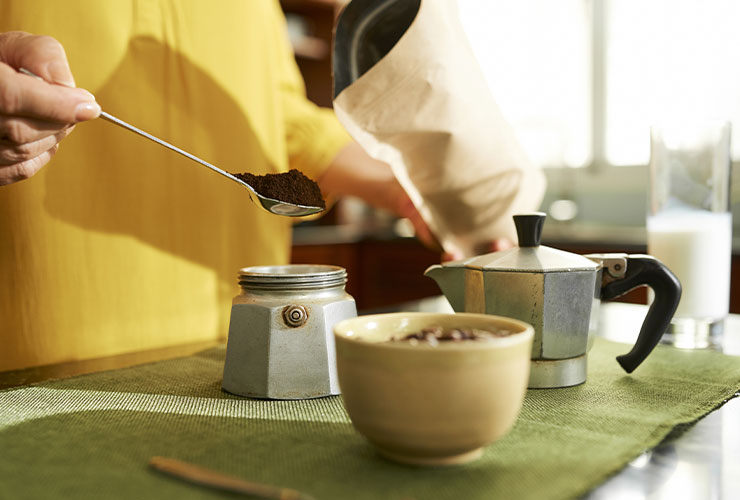
You make reference to the verb fare in Italian instead of to have in this statement.
Example:
Faccio colazione alle 8:00.
I have breakfast at 8:00.
9. Fare la doccia – to take a shower
In many expressions the verb to take is translated into fare in Italian.
Example:
Fai la doccia la sera o la mattina?
Do you take a shower in the evening or in the morning?
10. Fare un bagno – to take a bath/ bathe, to swim
Examples:
Stasera faccio un bagno rilassante.
Tonight I’ll take a relaxing bath.
Andiamo a fare un bagno al mare.
Let’s go for a swim in the sea.
11. Fare una passeggiata – To take a walk

You can also use fare due passi with the same meaning, literally to make two steps.
Examples:
Facciamo due passi.
Let’s take a walk.
Non voglio fare una passeggiata.
I don’t want to take a walk.
12. Fare un giro – To go for a stroll / a ride
Examples:
Joe va a fare un giro in macchina.
Joe goes for a ride.
I ragazzi fanno un giro in piazza.
The guys go for a stroll in the piazza.
13. Fare un pisolino – to take a nap
For this statement you can either use schiacciare or fare in Italian.
Example:
Molti italiani fanno / schiacciano un pisolino dopo pranzo.
Many Italians take a nap after lunch.
Note that schiacciare is less popular than fare in everyday conversations.
14. Fare due chiacchiere – to have a chat

You can say parlare or chiacchierare also with this statement using the verb fare in Italian.
Example:
Vieni qua e facciamo due chiacchiere.
Come here and let’s have a chat.
15. Fare una pausa – to take a break
Example:
Gli impiegati fanno una pausa solo per il pranzo.
Employees take a break only for lunch.
16. Fare un viaggio – to travel / take a trip
Example:
Non vedo l’ora di fare un viaggio.
I can’t wait to take a trip.
17. Fare una foto – to take a photo

Fare in Italian is also employed for taking pictures.
Example:
La ragazza fa tante foto.
The girl takes many pictures.
18. Fare il biglietto – to buy a ticket
Exactly, in this expression Italians prefer to apply fare instead of comprare (to buy).
Example:
Hai fatto il biglietto per il treno?
Did you buy the train ticket?
19. Fare una domanda – to ask a question
Verbs like domandare or chiedere (to ask) are not required if there is the word domanda (question) after. Also in this case you need fare in Italian.
Example:
Posso farti una domanda?
Can I ask you a question?
20. Fare la fila/ la coda – to wait in line

Example:
Non mi piace fare la fila.
I don’t like to wait in line.
21. Fare sport / ginnastica – to do sports / to exercise
Examples:
Mio figlio non fa sport.
My son doesn’t do sports.
Fate ginnastica tutti i giorni?
Do you exercise every day?
22. Fare un brindisi – to make a toast
You can either look at this expression with fare in Italian or brindare.
Example:
A Capodanno si fa un brindisi.
On New Year’s Eve people make a toast.
23. Fare una telefonata/ una chiamata – to make a call

Example:
Vorrei fare una telefonata / chiamata a Ciro.
I would like to call Ciro.
In addition to this statement with fare in Italian, we also have the verb chiamare with a direct object or telefonare with an indirect object.
Example:
Chiama Jay / Telefona a Jay e digli di venire qui.
Call Jay and tell him to come here.
24. Fare pace – to make up
Actually, this idiom with fare in Italian literally means to make peace.
Example:
Mi dispiace tanto, facciamo pace?
I am so sorry, can we make up?
25. Fare la spesa – to go grocery shopping
Example:
Io e mio marito facciamo la spesa la domenica.
My husband and I go grocery shopping on Sundays.
26. Fare le spese / shopping – to go shopping

Unlike the previous idiom, when Italians go shopping for clothes or other items, they usually say fare le spese or fare shopping.
Example:
Le mie amiche fanno shopping al centro commerciale.
My friends go shopping at the mall.
27. Fare presto / tardi – to be quick / late
In these two statements, instead of the verb essere (to be) you must apply fare in Italian
Examples:
Faccio presto, non ti preoccupare!
I’ll be quick, don’t worry!
Sbrigati o farai tardi!
Hurry up or you will be late!
28. Fare finta – to pretend
Example:
Non fare finta che non ti interessi.
Don’t pretend you don’t care.
29. Fare un regalo – to give a present

Fare in Italian can also replace regalare (to gift or to give as a gift) when followed bythe statement un regalo.
Example:
Gli hai fatto un regalo per il compleanno?
Did you give him a present for his birthday?
30. fare il possibile/di tutto – to do everything possible
Example:
Ho fatto di tutto per convincerlo, ma non ci sono riuscito.
I did everything possible to convince him, but I failed.
31. fare amicizia – to make friends
Example:
Non è molto brava a fare amicizia, vero?
She is not very good at making friends, is she?
32. fare casino / confusione – to make noise / create confusion
Examples:
Chi è che sta facendo casino? I bambini?
Who is making noise? Kids?
La smettete di fare confusione, per favore?
Would you stop creating confusion, please?
Remember that fare casino is generally used in colloquial language, while fare confusione in more formal contexts.
33. fare il pieno – to fill up the gas tank

Example:
Domani mi serve la macchina. Hai fatto il pieno?
Tomorrow I need the car. Did you fill up the gas tank?
34. fare attenzione – to pay attention
If you want to tell someone to be careful, you must employ fare in Italian, not pagare (to pay).
Example:
Certe volte dovresti fare attenzione a quello che dici!
Sometimes you should pay attention to what you say!
An alternative to fare attenzione is prestare attenzione, more formal but also effective.
Example:
Potrebbe cortesemente prestare attenzione quando parlo?
Could you please pay attention when I’m talking?
35. fare festa – to take a day off / to celebrate
According to the context, you employ this expression with fare in Italian when you want to say you are going to take a day off from work / school or you are going to celebrate.
Examples:
Non sei andato a scuola? Ho fatto festa.
Haven’t you gone to school? I’ve taken a day off.
Che dici? Facciamo festa il Primo Maggio?
What do you think? Shall we celebrate on May 1st?
36. Fare una festa – to throw a party

Example:
Facciamo una festa questa sera. Sarai dei nostri?
We are throwing a party this evening. Will you join us?
37. fare del proprio meglio – to do one’s best
Example:
Ha fatta davvero del suo meglio per superare tutti gli esami.
He truly did his best to pass all his exams.
38. fare alla romana – to split the check
This expression is very interesting because it refers to the local custom of people living in Rome to split the check equally according to the number of dining companions.
Example:
Ecco il conto. Facciamo alla romana?
Here is the check. Shall we split it?
39. fare da sé – to do something on your own
This statement has the same meaning of the expression fare da solo. However, this last one is much more common than the first one.
Example:
Non chiede mai aiuto. Fa sempre tutto da sé.
She never asks for help. She always does everything on her own.
40. fare il bravo/ la brava – be nice

This other statement including fare in Italian is mostly used when talking to children.
Example:
Fai il bravo / la brava quando mamma non c’è, ok?
Be nice when mom isn’t here, ok?
41. fare fatica – to struggle
Example:
Faccio fatica a credergli.
I struggle believing him
42. fare male / fare bene – act wrongly or rightly
Examples:
Vuole lasciare la scuola? Fa male.
Is he going to quit school? He’s acting wrongly.
Continueranno con lo sciopero. Fanno bene.
They’re going to keep striking. They’re acting rightly.
Remember not to confuse fare male in the meaning of act wrongly with fare male in the meaning of to hurt.
Example:
Come va la gamba oggi? Fa male.
How’s your leg today? It hurts.
43. fare schifo / senso – to be gross
Examples:
Mi fai schifo!
You disgust me!
Quest’ananas sulla pizza fa senso.
This pineapple on the pizza is gross.
Remember to apply these two statements with fare in Italian sparingly in order not to appear rude and impolite.
44. fare in tempo – to do something on time

Example:
Non so se farò in tempo per la festa.
I don’t know if I will make it on time for the party.
45. fare piacere – to please / make someone glad
Example:
Mi fa piacere se vieni.
I’ll be glad if you come.
46. fare colpo – to impress
Example:
Mi sa che hai fatto colpo.
I think you impressed them.
47. fare a meno – to do without something
Example:
Non posso fare a meno del caffè.
I can’t do without coffee
48. fare bella / brutta figura – to make a good / bad impression
Examples:
Lo studente fa una brutta figura se non sa niente.
The student looks bad if he doesn’t know anything.
Voglio comprare dei fiori per fare bella figura.
I want to buy some flowers to make a good impression
Note that you can replace the noun figura with the word impressione, always using fare in Italian.
Example:
Mi ha fatto davvero una buona impressione la tua nuova fidanzata.
Your new girlfriend really made a good impression on me.
49. Fare impressione – to shock

Example:
Luca mi fa impressione quando mi guarda fisso negli occhi.
Luca shocks / scares me when he stares at me.
50. Fare + infinito – Let / Make / Get + infinitive
Finally, fare in Italian,followed by an infinitive, translates the English expressions to make, to get and to let + infinitive.
Examples:
Riescono sempre a farla sorridere.
They always manage to make her smile.
Ieri mattina John ha fatto riparare la macchina.
Yesterday morning John got the car fixed.
Fammi sapere se hai bisogno di un passaggio fino all’aeroporto.
Let me know if you need a lift to the airport.
Common sayings with fare in Italian

Now let’s see some sayings with the verb fare in Italian:
| Italian | English |
| Chi la fa l’aspetti. | What comes around goes around. |
| Chi fa per sé fa per tre. | If you want something done well, do it yourself. |
| Tutto fa brodo. | Every little bit helps. |
| Tra il dire e il fare c’è di mezzo il mare. | It is easier said than done. |
| Non fare agli altri ciò che non vorresti fosse fatto a te. | Treat others as you want to be treated. |
| Fare di ogni erba un fascio. | To tar everyone with the same brush. |
| Fare buon viso a cattivo gioco | To play along with someone’s bad intent. |
Expressions with the verb Farsi
Fare in italian can be reflexive as well. Here are some expressions with the reflexive form farsi:
| Italian | English |
| farsi la barba | to shave |
| farsi coraggio | to hearten oneself / to give oneself courage |
| farsi in quattro | to bend over backwards |
| farsi vivo | to get in touch |
| farsi bello | to primp |
| farsi valere | to assert oneself |
| farsi capire | to make oneself understood |
| farsi gli affari propri | to mind one’s business |
| farsi male | to hurt oneself |
Examples:
Mi sono fatto coraggio e alla fine gliel’ho detto.
I gave myself courage and finally I told it to him.
Quando si subisce un’ingiustizia, bisogna sempre farsi valere.
When you suffer injustice, you always need to assert yourself.
Penso che di tanto in tanto dovresti farti gli affari tuoi.
I think you should mind your business from time to time.
As you can see, there are many and many ways to use fare in Italian. Make sure you remember the most common uses of fare and start using these expressions and sayings with Italians!